


An amala cooker is a specialized kitchen appliance that automates the preparation of amala, a popular West African swallow made from yam or cassava flour. Traditional amala cooking is slow because it requires boiling water, manual stirring, constant heat adjustment, and careful kneading. These steps can take thirty to fifty-five minutes of active work. An amala cooker speeds up the process by heating water rapidly, stirring continuously with a motorized paddle, maintaining precise temperature, and keeping the entire process in one pot. These features reduce the total cooking time to roughly eighteen to twenty-eight minutes and produce a smoother, more consistent texture. The appliance also improves safety and convenience. Overheat protection, dry-burn protection, cool-touch handles, and auto shut-off make it safer than an open stove. The cook can step away during parts of the cycle and use the time for other tasks. Cleanup is easier because the pot and paddle release amala quickly. For families and caterers, larger batch capacity means fewer repeated cycles. The engineering behind the appliance includes a strong motor, an optimized paddle shape, an even-heating pot, and a microcontroller that manages time and temperature. These components work together to save time and improve quality. Choosing the right amala cooker involves checking capacity, wattage, motor power, pot material, preset programs, and safety certifications such as CE, CB, GS, and RoHS. Maintenance is simple: unplug before cleaning, wash with warm soapy water, avoid abrasive cleaners, and store dry. The appliance is part of a growing market for ethnic kitchen tools that meet modern demands for convenience and cultural connection. Manufacturers such as Jiangmen Taifai Technology Co., Ltd., known as TAIFAI, support this market with OEM, ODM, and CKD services, 50 patents, 50 own moulds, ISO9001:2015 production, and a wide range of kitchen electric appliances. In summary, an amala cooker helps cooks work faster by removing the slowest and most tiring parts of traditional amala preparation while delivering reliable, high-quality results.
Amala is one of the most respected swallows in West African cuisine. It is smooth, elastic, and satisfying, often served with efo riro, gbegiri, ewedu, or a rich pepper stew. For many families, amala is not just food. It is a connection to tradition, comfort, and home. Yet the traditional way of making amala can be slow, physical, and unpredictable. A cook must boil water, measure yam flour, stir vigorously, manage heat, and work quickly to avoid lumps. The process demands attention from start to finish. An amala cooker changes that experience. It is a specialized kitchen appliance designed to mix, heat, and knead amala automatically. By combining rapid heating, continuous stirring, and precise temperature control, an amala cooker helps a cook finish the dish in far less time. The result is a smoother swallow, less physical strain, and more freedom in the kitchen.
This article explains why an amala cooker helps cooks work faster. It examines the traditional challenges, the engineering behind the appliance, the time savings, the quality benefits, and the practical features that matter. It also looks at how modern manufacturing partners, such as Jiangmen Taifai Technology Co., Ltd., known as TAIFAI, support the development of reliable kitchen electric appliances. For anyone who loves amala but dislikes the long preparation, an amala cooker can be a valuable addition to the kitchen.
undefined
Amala is typically made from yam flour, cassava flour, or a combination of both. The flour is stirred into boiling water until it forms a thick, smooth dough. The cook then kneads and turns the mixture over heat until it becomes elastic and glossy. The final texture should be soft enough to swallow without chewing but firm enough to hold its shape when dipped into soup. Achieving that texture by hand is a skill. It requires timing, strength, and experience.
When flour meets hot water, starch granules absorb moisture and swell. This process is called gelatinization. If the water is not hot enough, the starch does not fully gelatinize, and the amala remains grainy. If the mixture is not stirred quickly enough, dry flour pockets form, creating lumps. If the heat is too high, the bottom burns while the center remains undercooked. Traditional cooking depends on the cook managing all these variables at once. That is why amala preparation can feel like a race against time.
Several factors slow down the traditional method. First, the water must reach a rolling boil. Depending on the stove and pot, this can take ten to fifteen minutes. Second, the flour must be added gradually while stirring. If the cook adds too much at once, lumps appear. Third, the mixture must be turned and kneaded over heat for another ten to fifteen minutes. Fourth, the cook must pause to scrape the sides and bottom of the pot. Fifth, cleanup can be difficult because amala sticks to ordinary pots and wooden spoons. These steps add up. A single batch can take thirty to forty-five minutes of active work, and the cook cannot easily do anything else during that time.
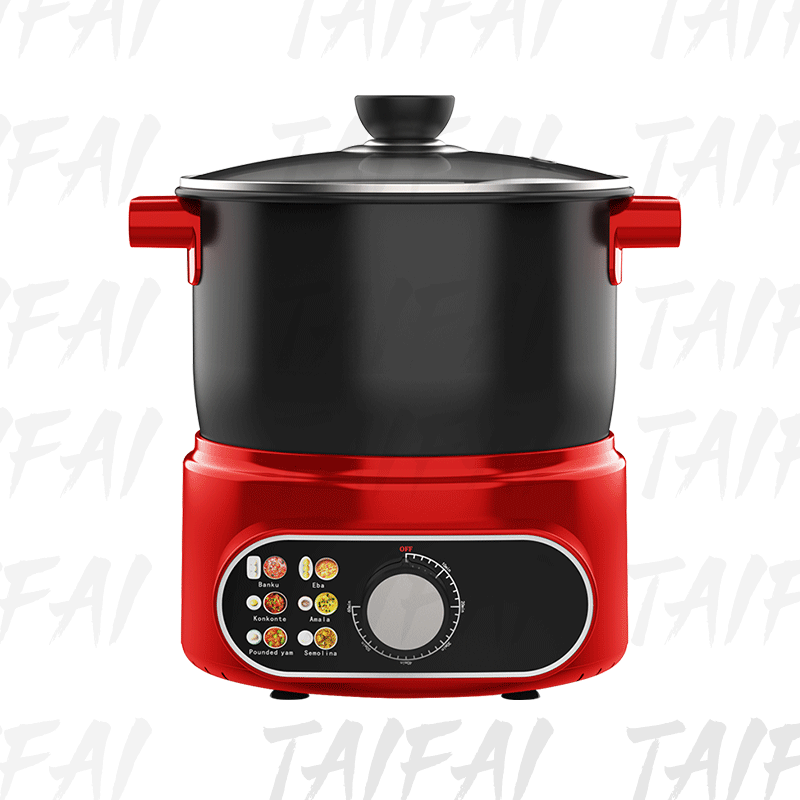
An amala cooker is a countertop electric appliance that automates the preparation of amala and similar swallows. It usually consists of a heating base, a cooking pot, a motorized paddle or stirring arm, a lid, and a control panel. Some models include preset programs for amala, semo, fufu, poundo yam, and other dough-like foods. The appliance heats the water, signals when to add flour, stirs the mixture continuously, and maintains the correct temperature until the amala is ready. The cook simply measures ingredients, selects a setting, and waits. The machine handles the heavy stirring and the precise heat management.
Although the name focuses on amala, many appliances in this category can also prepare semovita, wheat, fufu, cassava dough, and other West African swallows. This versatility makes the appliance more useful in a busy kitchen. A cook can prepare different meals without buying separate machines. The same motor and heating system that speeds up amala can also simplify other traditional dishes.
An amala cooker is designed to heat water quickly. The heating element is often in direct contact with the bottom of the pot, and the pot itself may have a thick, conductive base. This reduces the time needed to reach boiling point. More importantly, the heat is spread evenly across the cooking surface. There are no hot spots that burn the amala while leaving other parts undercooked. Even heating means the cook does not need to wait for the mixture to catch up or repair uneven patches. The entire batch cooks at a consistent rate.
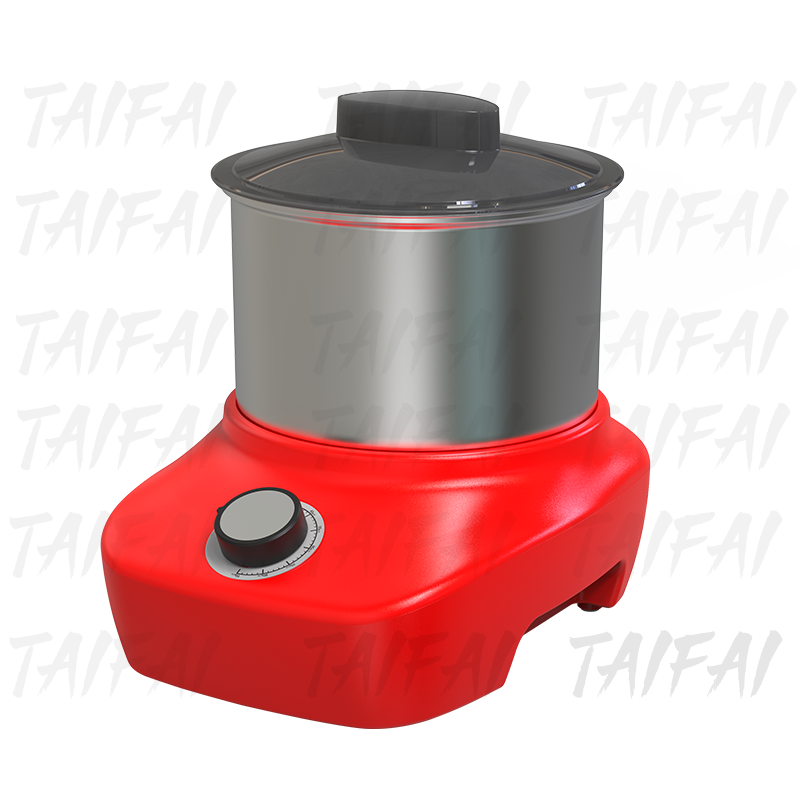
The biggest time saver is the motorized paddle. In traditional cooking, the cook must stir, pause, scrape, and stir again. Each pause slows down gelatinization and increases the risk of lumps. An amala cooker stirs continuously from the moment the flour is added. The paddle reaches the sides and bottom of the pot, so no dry flour hides in corners. Continuous stirring also helps the amala become smooth faster. What might take ten minutes of hard manual work can be accomplished in two or three minutes of machine stirring.
An amala cooker uses thermostats and sensors to maintain the ideal cooking temperature. The cook does not have to guess when to lower the flame or when to increase it. The appliance follows a preset curve: heat water, signal for flour, stir, cook, and rest. Because the temperature remains stable, the starch gelatinizes evenly and quickly. There is less waiting for the mixture to recover from temperature swings. Precise control also prevents boil-overs and burning, which can force the cook to start over.
Traditional amala often requires a pot, a wooden spoon, a bowl for flour, and sometimes a separate container for kneading. An amala cooker keeps the entire process in one pot. The flour goes in, the paddle stirs, and the amala is served. This eliminates the need to transfer the dough, which saves time and reduces mess. Cleanup is also faster because the non-stick or stainless steel pot releases the amala easily. Less time spent scrubbing means more time for other tasks.
Many amala cookers can handle larger batches than a person can comfortably stir by hand. A cook who needs to feed a family or a group can prepare more amala in one cycle. This is faster than making two or three small batches on the stove. The motor does not get tired, and the heating system remains consistent. For caterers, busy mothers, and community cooks, this capacity is a major advantage.
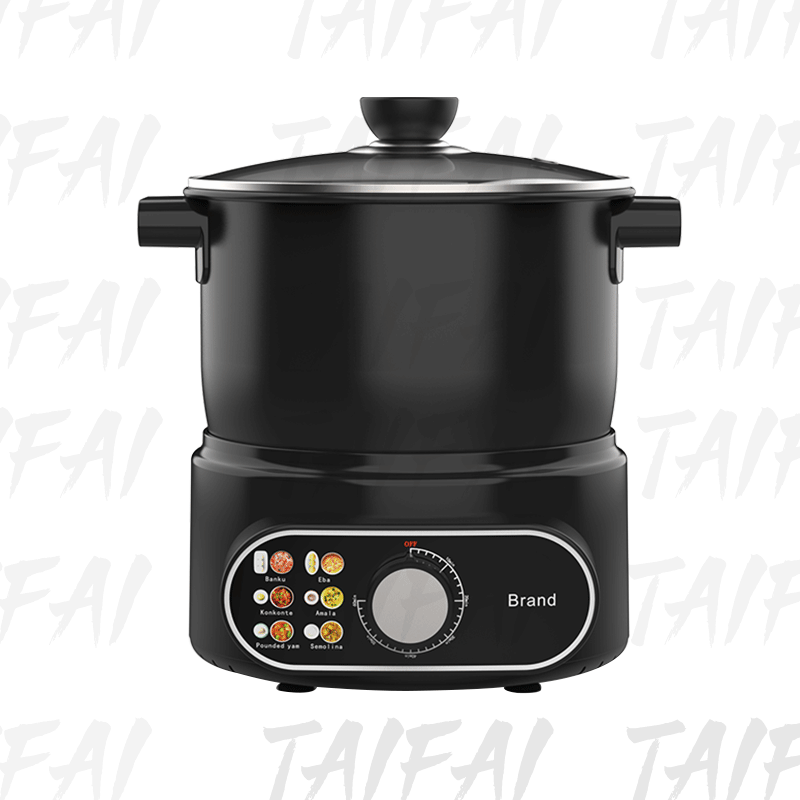
With an amala cooker, the cook can step away during parts of the cycle. The machine stirs and maintains temperature without help. This allows the cook to prepare soup, set the table, or attend to other duties. In a traditional setup, leaving the pot for even a minute can lead to lumps or burning. The appliance turns amala preparation from a hands-on task into a managed process. That parallel work saves real time in the overall meal preparation.
| Stage | Traditional Method | Amala Cooker | Time Saved |
|---|---|---|---|
| Boiling water | 10 to 15 minutes | 5 to 8 minutes | 5 to 7 minutes |
| Adding flour and initial mixing | 5 to 10 minutes | 1 to 2 minutes | 4 to 8 minutes |
| Continuous stirring and kneading | 10 to 15 minutes | 8 to 12 minutes | 2 to 3 minutes |
| Resting and final smoothing | 5 minutes | 2 minutes | 3 minutes |
| Cleanup | 5 to 10 minutes | 2 to 4 minutes | 3 to 6 minutes |
| Total | 35 to 55 minutes | 18 to 28 minutes | 17 to 27 minutes |
The table shows a conservative estimate. In practice, the savings can be even greater when the cook is not skilled at traditional stirring or when the stove is slow. The amala cooker also reduces the mental load. The cook does not have to watch the clock or worry about burning. That mental relief is difficult to measure but very real.
Each step is designed to remove guesswork. The cook still controls the ingredients, but the machine controls the heat and motion. This division of labor is what makes the process faster and more reliable.
Speed is not the only benefit. An amala cooker also improves quality and consistency. A machine can stir at the same speed and rhythm every time. This produces a uniform texture that is difficult to achieve by hand. The amala comes out smooth, elastic, and free of lumps. For restaurants and caterers, consistency is essential. Customers expect the same quality with every order. An amala cooker helps deliver that consistency at scale.
The continuous stirring action helps the starch gelatinize evenly. This creates a glossy surface and a soft, stretchy interior. The amala does not taste raw or grainy. Because the temperature is controlled, the natural flavor of the yam or cassava flour is preserved. There is no burnt aftertaste. The texture is also easier to swallow, which is important for the traditional way amala is eaten with soup.
These features make the appliance safer than a pot of boiling amala on an open stove. The cook does not need to stand over hot steam or reach into a sticky pot. This is especially helpful for elderly cooks, busy parents, and anyone with limited mobility.
An amala cooker is not a simple pot with a spoon. It is a carefully engineered appliance. The speed and reliability come from the interaction of several systems. The motor must have enough torque to stir thick dough. The paddle must be shaped to reach all areas of the pot. The heating element must be powerful but controllable. The control system must coordinate heat and motion. Each component affects the final cooking time.
A weak motor will stall when the amala becomes thick. A strong motor with a gear reduction system can maintain speed under load. The paddle is often designed with angled blades or a spiral shape. This shape pushes the dough inward and upward, mimicking the folding motion of hand kneading. The paddle also scrapes the bottom and sides to prevent sticking. When the paddle is well designed, the amala forms faster and requires less resting time.
The heating element may be cast into the base or wrapped around the pot. Cast-in elements provide excellent heat transfer and are easy to clean. The pot may be made of stainless steel, aluminum with a non-stick coating, or a multi-layer material. Stainless steel is durable and resistant to scratches. Non-stick coatings make cleanup easier and reduce the need for oil. A thick pot bottom distributes heat evenly, which prevents hot spots and reduces cooking time.
Modern amala cookers use microcontrollers and sensors to manage the cooking cycle. A temperature sensor monitors the pot and adjusts power as needed. A timer controls the stirring duration. Some models use fuzzy logic to adapt to different flour types and quantities. These systems make the appliance faster because they eliminate the delays caused by human reaction time. The machine responds instantly to changes in temperature or consistency.
Not all amala cookers are equal. The speed and convenience depend on the features. A buyer should consider capacity, wattage, motor power, pot material, controls, and safety certifications. The following table summarizes the key features and why they matter.
| Feature | Why It Matters |
|---|---|
| Capacity | Determines how many people the cooker can serve in one batch. |
| Wattage | Higher wattage means faster heating and shorter boiling time. |
| Motor power | Stronger motors handle thick amala without stalling. |
| Pot material | Affects heat distribution, durability, and cleanup. |
| Preset programs | Simplify operation and improve consistency. |
| Safety certifications | Show compliance with international standards. |
A single person may need a small cooker with a one- or two-liter pot. A family of four may need three to five liters. A caterer may need a larger model or multiple units. Buying a cooker that is too small can lead to repeated batches, which defeats the purpose of saving time. Buying one that is too large can waste energy and counter space. The right capacity matches the typical batch size.
Wattage affects how quickly the water boils. A higher wattage generally means faster heating, but it also uses more electricity. Motor power affects how well the machine stirs thick dough. A motor with low power may slow down or stop when the amala becomes heavy. A motor with good torque will maintain a steady stir. The best appliances balance wattage and motor power for efficient performance.
Stainless steel pots are durable and do not react with food. They can be scrubbed without damage. Non-stick pots are easier to clean and require less oil, but the coating can wear over time. Some pots have a ceramic coating for a natural non-stick surface. The choice depends on the cook's priorities. For speed, a pot that heats quickly and releases food easily is ideal.
Simple dials are easy to use. Digital controls offer more precision and preset programs. A preset for amala takes the guesswork out of timing and temperature. Some models also have manual settings for custom recipes. A clear display and audible alerts help the cook know when to add flour and when the amala is ready. These small features save time and reduce mistakes.
Certifications such as CE, CB, GS, and RoHS indicate that the appliance has been tested for safety, electrical performance, and environmental compliance. A certified product is more likely to be reliable and safe. Buyers should look for these marks when choosing an amala cooker. Manufacturers that follow ISO9001:2015 standards also demonstrate a commitment to consistent quality.
These tips are simple, but they can shave several minutes off the total time. They also improve the final texture. A cook who follows the machine's instructions will get better results than one who improvises.
An amala cooker prevents many of these mistakes, but the cook still plays a role. Reading the manual and measuring ingredients carefully will lead to faster, better results.
An amala cooker works fastest when it is well maintained. A dirty heating base, a worn paddle, or a damaged seal can reduce performance. Regular care keeps the appliance running at peak efficiency. It also extends the life of the machine.
A well-maintained amala cooker heats faster, stirs more smoothly, and lasts longer. The small effort of cleaning and inspection pays off in time saved over many meals.
| Method | Speed | Consistency | Effort | Cleanup |
|---|---|---|---|---|
| Traditional stove and wooden spoon | Slow | Depends on skill | High | Difficult |
| Microwave method | Medium | Often uneven | Medium | Moderate |
| Stand mixer with pot | Medium | Good | Medium | Moderate |
| Dedicated amala cooker | Fast | Excellent | Low | Easy |
The dedicated amala cooker wins on speed, consistency, effort, and cleanup. It is designed specifically for the task. A stand mixer may stir, but it is not built to heat and cook amala. A microwave can heat, but it does not knead. The amala cooker combines both functions in one appliance.
Faster cooking often means less energy use. An amala cooker may draw more power than a stove burner, but it runs for a shorter time. The total electricity used can be lower than the energy needed to boil water and cook amala on a stove for thirty minutes. The exact cost depends on local electricity rates and the wattage of the appliance. However, the time savings and convenience often justify the cost.
There is also the cost of ingredients. Because the amala cooker produces consistent results, there is less waste from burnt or lumpy batches. A cook does not need to throw away failed amala or start over. This saves money over time. The appliance also reduces the need for takeout or prepared foods when the cook is too tired to stir by hand. In that sense, it pays for itself in both time and money.
Behind many reliable kitchen appliances is a manufacturing partner with deep expertise. Jiangmen Taifai Technology Co., Ltd., known as TAIFAI, is one such company. Located in Jiangmen City, Guangdong Province, China, a flourishing home appliances manufacturing base, TAIFAI was founded in 2007. It is a high-tech enterprise with capabilities and services of independent research and development, production, and sales. Its main products include electric blender, juicer, citrus juicer, hand mixer, hand blender, stand mixer, coffee grinder, chopper, and food processor. The company supports OEM, ODM, and CKD projects. It has 50 patents and 50 own moulds. Its production follows ISO9001:2015 standards, and many products have CE, CB, GS, and RoHS certification. With fantastic design, good performance, multi-functional features, and reasonable price, TAIFAI is a professional kitchen appliances manufacturer with excellent scale and technology in China. It is a high quality kitchen electric appliances provider integrating design, research, development, production, sales, and service.
For brands that want to launch an amala cooker, a partner like TAIFAI can help with motor selection, paddle geometry, heating control, safety compliance, and mass production. The same engineering discipline used in blenders, mixers, and food processors can be applied to an amala cooker. This is important because speed and reliability do not happen by accident. They come from tested components, optimized moulds, and strict quality management. A manufacturer with patents, own moulds, and international certifications can help a brand bring a competitive amala cooker to market faster.
Demand for ethnic kitchen appliances is growing. Members of the African diaspora want to enjoy traditional foods without spending hours in the kitchen. Busy professionals want convenient tools that fit modern lifestyles. Health-conscious consumers want to control ingredients and avoid preservatives. An amala cooker meets all these needs. It makes traditional food faster, easier, and more consistent. Retailers and brands are paying attention.
An amala cooker fits these trends. It is a specialized appliance with broad appeal. As more consumers discover the benefits, the market is likely to expand. Manufacturers that can produce reliable, certified, and affordable appliances will have an advantage.
An amala cooker helps cooks work faster by combining rapid heating, continuous mechanical stirring, precise temperature control, and one-pot convenience. It reduces the physical effort of traditional amala preparation and eliminates many of the delays caused by lumps, uneven heat, and constant supervision. The result is a smoother, more consistent swallow in less time. For families, caterers, and busy professionals, the appliance offers a practical way to enjoy a beloved traditional food without the long, tiring process.
When choosing an amala cooker, buyers should consider capacity, wattage, motor power, pot material, controls, and safety certifications. Proper use and maintenance will keep the appliance performing at its best. For brands and retailers, partnering with an experienced manufacturer such as TAIFAI can help bring high-quality amala cookers to market. With the right design and engineering, an amala cooker can turn a time-consuming tradition into a fast, reliable, and enjoyable kitchen experience.
Summary
An amala cooker is a specialized kitchen appliance that automates the preparation of amala, a popular West African swallow made from yam or cassava flour. Traditional amala cooking is slow because it requires boiling water, manual stirring, constant heat adjustment, and careful kneading. These steps can take thirty to fifty-five minutes of active work. An amala cooker speeds up the process by heating water rapidly, stirring continuously with a motorized paddle, maintaining precise temperature, and keeping the entire process in one pot. These features reduce the total cooking time to roughly eighteen to twenty-eight minutes and produce a smoother, more consistent texture.
The appliance also improves safety and convenience. Overheat protection, dry-burn protection, cool-touch handles, and auto shut-off make it safer than an open stove. The cook can step away during parts of the cycle and use the time for other tasks. Cleanup is easier because the pot and paddle release amala quickly. For families and caterers, larger batch capacity means fewer repeated cycles. The engineering behind the appliance includes a strong motor, an optimized paddle shape, an even-heating pot, and a microcontroller that manages time and temperature. These components work together to save time and improve quality.
Choosing the right amala cooker involves checking capacity, wattage, motor power, pot material, preset programs, and safety certifications such as CE, CB, GS, and RoHS. Maintenance is simple: unplug before cleaning, wash with warm soapy water, avoid abrasive cleaners, and store dry. The appliance is part of a growing market for ethnic kitchen tools that meet modern demands for convenience and cultural connection. Manufacturers such as Jiangmen Taifai Technology Co., Ltd., known as TAIFAI, support this market with OEM, ODM, and CKD services, 50 patents, 50 own moulds, ISO9001:2015 production, and a wide range of kitchen electric appliances. In summary, an amala cooker helps cooks work faster by removing the slowest and most tiring parts of traditional amala preparation while delivering reliable, high-quality results.


