


Choosing a frozen dessert maker requires more than comparing prices and capacities. The most important factors are cooling technology, motor torque, bowl and dasher materials, capacity, controls, cleaning design, safety certifications, and after-sales support. Compressor models offer continuous freezing and multiple batches, while pre-freeze bowl models offer lower cost and smaller footprints. Thermoelectric and soft-serve designs serve more specialized needs. A high-torque motor with stall protection handles dense bases better than a fast motor without protection. Food-grade, BPA-free materials and double-walled bowls improve safety and performance. Certifications such as CE, CB, GS, RoHS, and ISO9001:2015 provide evidence of testing and quality management. Buyers should also examine warranty terms, spare parts availability, noise, vibration, and ease of cleaning. For retailers and distributors, the manufacturing partner matters. Jiangmen Taifai Technology Co.,Ltd, known as TAIFAI, is a high-tech enterprise founded in 2007 in Jiangmen City, Guangdong Province, China. It supports OEM, ODM, and CKD, holds dozens of patents and fifty moulds, and produces electric blenders, juicers, citrus juicers, hand mixers, hand blenders, stand mixers, coffee grinders, choppers, and food processors under ISO9001:2015 standards. Its products carry CE, CB, GS, and RoHS certifications. A systematic evaluation of these criteria helps consumers, brands, and distributors select a frozen dessert maker that delivers reliable performance, safe operation, and long-term satisfaction.
A frozen dessert maker is more than a novelty appliance. It sits at the intersection of food science, mechanical engineering, and everyday kitchen convenience. For a consumer, the decision can feel simple: choose a machine, freeze a base, and enjoy gelato, sorbet, frozen yogurt, or ice cream. In practice, the differences between models are substantial. Cooling method, motor torque, bowl material, batch capacity, control interface, cleaning design, safety certification, and after-sales support all influence whether the appliance becomes a weekly favorite or a cabinet dweller. A careful buyer evaluates those variables before purchase, not after the first failed batch.
This article examines the factors that matter most in a frozen dessert maker. It approaches the topic from a third-person perspective, focusing on what shoppers, retailers, and product developers should consider. It also draws on examples from kitchen appliance manufacturing, including the practices of Jiangmen Taifai Technology Co.,Ltd, abbreviated as TAIFAI, a Chinese manufacturer founded in 2007. The goal is not to promote a single model but to provide a durable framework for comparing options.
Frozen dessert makers fall into several broad categories. Each category solves a different problem, and each carries distinct trade-offs. A buyer who understands the category first can avoid comparing apples to oranges.
undefined
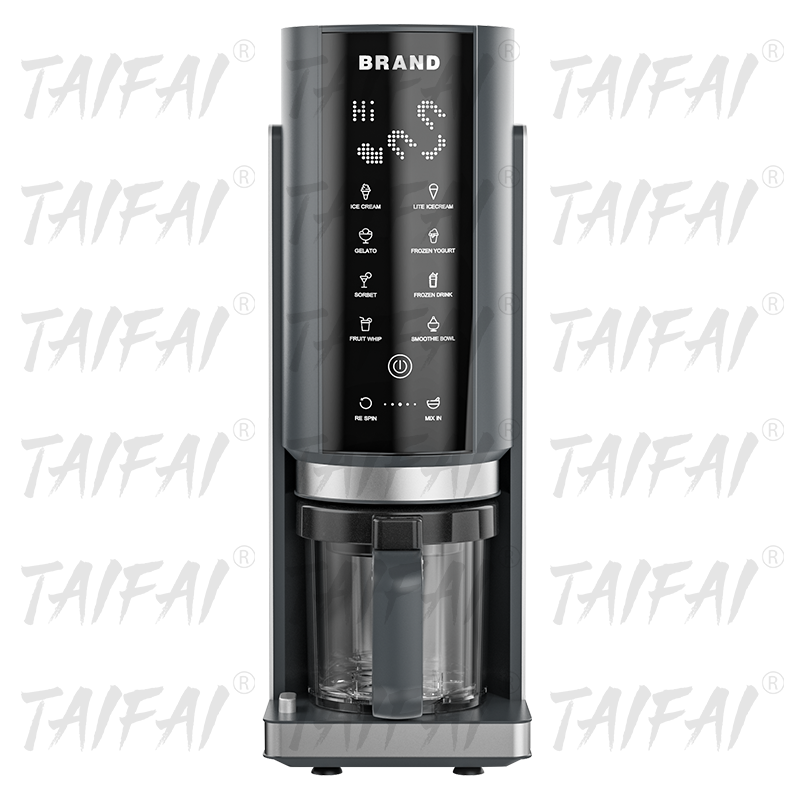
Countertop compressor models contain a built-in refrigeration system. They do not require pre-freezing a bowl. A user pours a chilled base into the bowl, starts a program, and waits. The compressor removes heat continuously, which allows the machine to churn multiple batches in one session. These models are larger, heavier, and more expensive, but they offer the closest experience to a professional gelato machine. They are ideal for households that entertain, experiment with recipes, or want spontaneity.
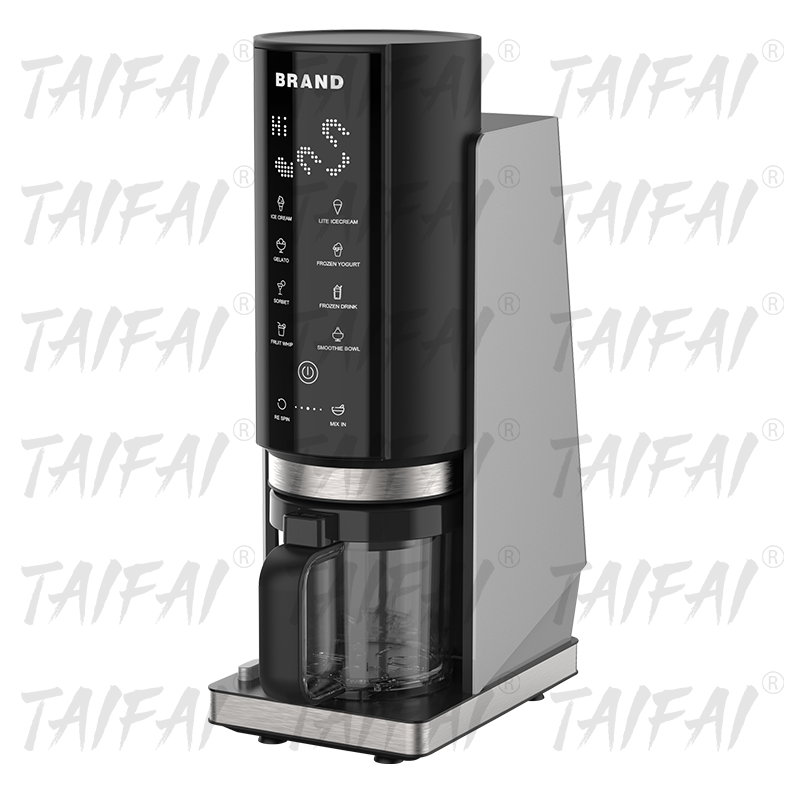
Pre-freeze bowl models require the bowl to be frozen for many hours, often twelve to twenty-four. The bowl contains a coolant gel that absorbs heat from the mixture. These machines are lighter, quieter, and more affordable. Their limitation is batch rhythm. Once the bowl warms, the user must refreeze it before another batch. They suit small households, occasional use, and buyers with limited counter space.
Soft-serve and gelato machines may include a dasher, a dispensing mechanism, and sometimes a built-in compressor. They produce a softer, smoother texture and can handle higher fat or higher sugar bases. Some are designed for commercial use, with higher capacity and continuous duty cycles. For home buyers, these machines can be appealing but may be overkill. The key question is whether the extra features justify the cost, footprint, and cleaning time.
Cooling technology is the heart of a frozen dessert maker. It determines how quickly the base freezes, how small the ice crystals become, and how consistently the machine performs across recipes.
Compressor cooling is the most powerful and reliable option. It uses a refrigerant cycle to pull heat from the bowl. Thermoelectric cooling uses the Peltier effect; it is quieter and simpler but generally less powerful and less efficient for freezing dense bases. Pre-chilled bowls rely on stored cold energy; they work well for small batches but lose performance as the coolant warms. A buyer should match the cooling method to expected use. A frequent user who wants back-to-back batches should prioritize a compressor. A casual user may find a pre-freeze bowl sufficient.
Time to first batch is a practical metric. Compressor models may take thirty to sixty minutes to churn and freeze a batch, depending on the base and starting temperature. Pre-freeze bowl models may take twenty to forty minutes, but the bowl preparation time is much longer. Buyers should consider total time, not just churning time. A machine that promises fast churning but requires overnight bowl freezing may not deliver the convenience a household expects.
Consistency refers to the texture of the final dessert. Overrun is the amount of air incorporated into the mixture. More overrun creates a lighter, fluffier product; less overrun creates a denser, richer product. A good frozen dessert maker gives the user some control over overrun through churning speed, dasher design, and batch time. Machines that incorporate too much air can make a premium base taste watery. Machines that incorporate too little air can produce a heavy, icy block. The best models balance both.
The motor and drive system determine whether the machine can churn a thick, frozen base without stalling. This is especially important as the mixture thickens near the end of the cycle.
Direct-drive systems connect the motor more directly to the dasher. They tend to be efficient, quiet, and durable. Belt-drive systems can absorb shock and reduce noise, but they may require more maintenance over time. For a frozen dessert maker, torque matters more than raw speed. A high-torque motor can turn a dense base slowly and steadily, which produces better texture than a fast motor that struggles and stops.
Stall protection is a safety and durability feature. If the mixture becomes too hard, the motor should pause, reverse, or shut down rather than burn out. Buyers should look for models that mention overload protection, thermal cutoffs, or automatic reverse. These features protect the appliance and reduce the risk of a ruined batch.
Noise and vibration are often overlooked. A machine that shakes across the counter is not only annoying but also potentially unsafe. Rubber feet, a weighted base, and a well-balanced dasher reduce movement. Compressor models naturally produce more noise than pre-freeze bowl models, but the difference should be manageable. A buyer who plans to use the machine while others sleep should consider decibel ratings and user reviews.
The bowl and dasher contact the food directly. Their materials, construction, and design affect safety, durability, and cleaning.
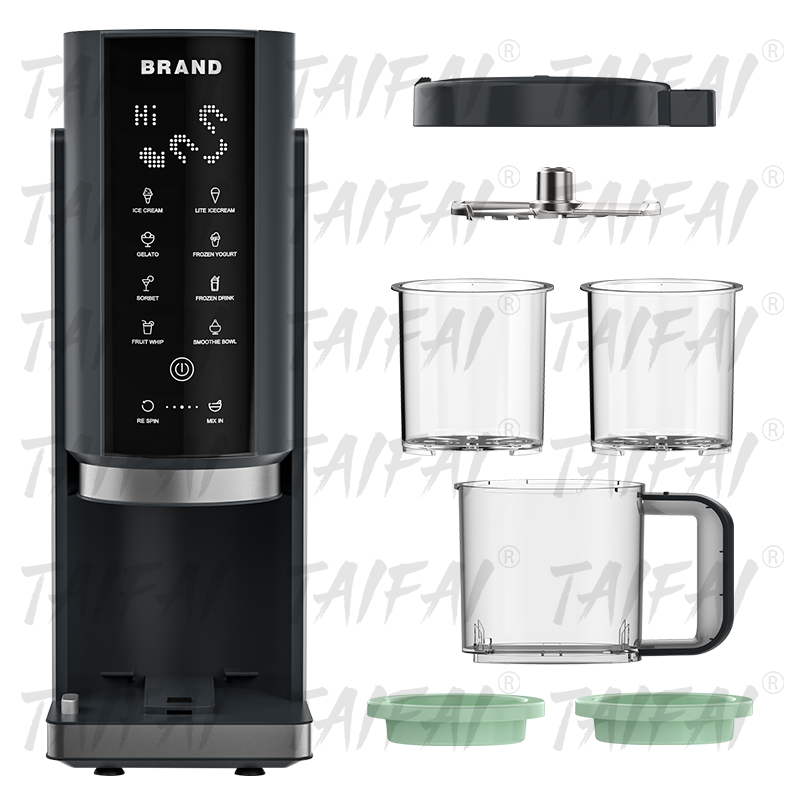
Food-grade stainless steel, BPA-free plastics, and safe nonstick coatings are common. Stainless steel is durable, non-reactive, and easy to clean. Plastic bowls are lighter and less expensive but can scratch, stain, or retain odors over time. A buyer should check whether the bowl is double-walled, whether the dasher is removable, and whether the materials are certified for food contact.
Double-walled bowls improve thermal performance. In pre-freeze models, insulation slows the warming of the coolant. In compressor models, insulation helps maintain temperature and reduces energy consumption. A well-insulated bowl can also reduce condensation on the exterior, which keeps counters drier.
Buyers should look for explicit statements about BPA-free construction and food-contact compliance. Migration testing ensures that materials do not release harmful substances into acidic or high-fat mixtures. This is particularly important for frozen desserts, which often contain dairy, sugar, fruit acids, and alcohol.
Capacity is not just about volume. It is about matching the machine to the household, the recipe, and the serving occasion.
A one- to two-person household may be satisfied with a one-quart or one-liter machine. Families of four or more may prefer a two-quart or larger capacity. However, larger capacity can be a disadvantage if the bowl must be filled to a minimum level for the dasher to work properly. Buyers should check both maximum and minimum fill lines.
Different recipes require different volumes. Sorbet may expand less than ice cream; gelato may require a specific overrun; frozen yogurt may be denser. A machine with a flexible capacity range can handle more recipes. Some models include multiple bowls or allow partial batches. These features can be valuable for experimentation.
The control interface shapes daily use. A complicated machine may produce excellent results but discourage regular use.
Manual controls give the user full authority over churning time and speed. Preset programs simplify the process for common desserts such as ice cream, sorbet, gelato, and frozen yogurt. A good design offers both. Presets help beginners, while manual mode supports advanced users who want to fine-tune texture.
A clear display and countdown timer reduce guesswork. Some machines include audible alerts when the batch is ready. Others include a keep-cool function that maintains the dessert for a short period after churning. These features are convenient but should not replace basic performance.
As noted earlier, noise and vibration affect user experience. A machine that is easy to operate but unbearable to hear may be used less often. Buyers should read reviews that mention noise during the freeze cycle, not just during mixing.
Cleaning is a decisive factor in long-term satisfaction. A frozen dessert maker that is difficult to clean will be used less frequently, regardless of its performance.
Removable bowls, dashers, and lids should be easy to detach and reassemble. Parts that trap food in crevices can become unsanitary. Dishwasher-safe components are a major advantage, but buyers should verify which parts are actually dishwasher-safe and which require hand washing.
Some models advertise self-cleaning cycles. These cycles typically rinse the bowl with water and spin the dasher. They can help with light residue but rarely replace a thorough hand wash. Buyers should treat self-cleaning as a convenience, not a guarantee of hygiene.
Durability depends on motor quality, seal integrity, and material thickness. A machine with a strong motor but a thin bowl may fail at the seal. A machine with a thick bowl but a weak motor may stall. Buyers should look for warranties that cover both mechanical and electrical components.
Energy use matters for compressor models, which run a refrigeration system. Even small efficiency differences can add up over years of use.
A efficient compressor reaches the target temperature faster and cycles less often. Buyers can look for energy ratings, though these vary by region. A well-insulated bowl and a tight lid also improve efficiency by reducing heat gain.
Refrigerants have environmental impacts. Some regions regulate high-global-warming-potential refrigerants. A buyer who values sustainability may prefer models that use lower-impact refrigerants. This information is not always prominent, but manufacturers should provide it on request.
Safety certifications indicate that a product has been tested against recognized standards. They are especially important for appliances that combine electricity, moving parts, and food contact.
Certifications such as CE, CB, GS, and RoHS are common for kitchen appliances sold in international markets. CE indicates conformity with European health, safety, and environmental requirements. CB supports international certification. GS is a German safety mark. RoHS restricts hazardous substances. A buyer should look for these marks on the product, packaging, or manual.
Food-contact compliance covers the bowl, dasher, lid, and any parts that touch the mixture. Materials should be tested for migration and durability. This is a legal requirement in many markets and a basic quality expectation everywhere.
Quality management systems such as ISO9001:2015 show that a manufacturer follows documented processes for production and quality control. This does not guarantee perfection, but it reduces the risk of inconsistent batches, missing inspections, or undocumented changes.
The brand name on the box may not be the company that designed or built the machine. Many frozen dessert makers are produced by contract manufacturers. Understanding the manufacturing partner can reveal important clues about quality, certification, and support.
Some manufacturers support OEM, ODM, and CKD arrangements. OEM means original equipment manufacturing, where the factory builds to a brand's specifications. ODM means original design manufacturing, where the factory contributes design and engineering. CKD means completely knocked down, where components are shipped for assembly in another location. These capabilities matter to retailers and distributors, but they also signal a manufacturer's flexibility and engineering depth.
Patents and moulds indicate investment in original design. A manufacturer with dozens of patents and proprietary moulds is more likely to control quality and differentiate its products. For example, Jiangmen Taifai Technology Co.,Ltd, known as TAIFAI, has been recognized for dozens of patents and owns fifty moulds. This kind of intellectual property supports consistent tooling and faster iteration.
A broad product portfolio can indicate manufacturing experience. TAIFAI, founded in 2007, is located in Jiangmen City, Guangdong Province, China, a flourishing home appliances manufacturing base. The company is a high-tech enterprise with independent research and development, production, and sales capabilities. Its main products include electric blenders, juicers, citrus juicers, hand mixers, hand blenders, stand mixers, coffee grinders, choppers, and food processors. A manufacturer with experience across multiple kitchen appliance categories often has mature motor, sealing, and food-contact expertise that can benefit a frozen dessert maker.
TAIFAI supports OEM, ODM, and CKD services. Its products have been approved for dozens of patents, and production follows ISO9001:2015 standards. The company emphasizes strict management of production operation and quality. Many of its products carry CE, CB, GS, and RoHS certification, with design, performance, multifunctionality, and reasonable price as key attributes. TAIFAI describes itself as a professional kitchen appliances manufacturer with excellent scale and technology in China, integrating design, research, development, production, sales, and service. These attributes are relevant to buyers who want a reliable manufacturing partner rather than a one-off supplier.
Price is important, but it should be evaluated alongside warranty, spare parts, and service.
Total cost includes purchase price, electricity, cleaning supplies, replacement parts, and time. A cheaper machine that stalls, leaks, or rusts may cost more in the long run. A higher-priced machine with a strong warranty and available parts may be more economical.
Warranties vary from ninety days to several years. Buyers should check what is covered: motor, compressor, electronics, bowl, seals, and labor. A long warranty on paper is not useful if the process for claims is difficult. Reading the warranty terms before purchase prevents surprises.
Availability of spare parts matters for compressor models and models with removable bowls. If a lid, dasher, or seal breaks, the buyer should be able to replace it without buying a new machine. Manufacturers that support long-term parts availability are preferable.
A frozen dessert maker performs best when the base is prepared correctly. Dairy bases should be chilled thoroughly before churning. Sugar levels should be balanced because sugar lowers the freezing point and affects texture. Fat content should be appropriate for the desired creaminess. Stabilizers such as gelatin, cornstarch, or commercial ice cream stabilizers can improve body and reduce ice crystal growth, but excessive amounts can create a gummy texture.
Alcohol presents a special challenge. It lowers the freezing point and can prevent the mixture from setting. A buyer who wants to make wine sorbet, bourbon ice cream, or rum raisin should choose a machine with strong cooling and a long churn cycle. Low-sugar and no-sugar bases also require attention because they may freeze harder and strain the motor. In those cases, motor torque and stall protection become even more important.
Mix-ins such as chocolate chips, nuts, cookie pieces, and fruit should be added at the right time. If they are added too early, they can sink, break the dasher, or prevent even freezing. Some machines include a dedicated mix-in chute or a timed add-in alert. These features are convenient but not essential. A buyer can also add mix-ins manually near the end of the cycle.
Pre-freeze bowls should be stored flat in a freezer that maintains a consistent temperature. They should not be stored near strong-smelling foods because plastic can absorb odors. Compressor bowls should be cleaned and dried before storage. Seals should be checked periodically for cracks or residue. Proper storage extends the life of the machine and improves food safety.
Texture is the result of several interacting variables. Ice crystal size is one of the most important. Small ice crystals create a smooth, creamy mouthfeel. Large ice crystals create a coarse, icy texture. A frozen dessert maker promotes small crystals by freezing quickly and churning constantly. A slow freeze or a stalled dasher allows crystals to grow.
Fat contributes richness and helps coat the palate. Sugar adds sweetness and lowers the freezing point, which keeps the dessert soft enough to scoop. Stabilizers bind water and slow melting. Emulsifiers help fat and water stay mixed. A buyer does not need to be a food scientist, but understanding these basics helps explain why some machines produce better results than others.
The base should be cold before churning. A warm base forces the machine to remove more heat, which lengthens the cycle and can lead to larger crystals. Many recipes recommend refrigerating the base for several hours or overnight. This step is not optional for premium results.
For pre-freeze models, the bowl must be fully frozen. A partially frozen bowl will not freeze the base properly. For compressor models, pre-chilling the bowl is less critical, but it can still improve performance. Manufacturers often include a pre-chill recommendation in the manual.
Commercial frozen dessert makers are built for higher volume, longer duty cycles, and more intensive cleaning. They may include stronger compressors, larger bowls, and more durable components. Residential models are designed for occasional use and smaller batches. A buyer who plans to sell desserts should not rely on a residential machine. A buyer who makes dessert once a week may not need commercial-grade construction.
Retailers and distributors should consider the intended market. A residential model with attractive design and simple controls may sell well in home goods channels. A commercial model with stainless steel construction and high capacity may suit food service suppliers. Understanding the target user helps determine which features to prioritize.
Packaging protects the appliance during shipping and shapes the first impression. A well-designed package includes molded inserts, clear instructions, and protective film. It should also communicate certifications, capacity, and key features. Excessive packaging increases cost and waste; inadequate packaging increases damage rates. Manufacturers that balance protection and efficiency tend to have better customer satisfaction.
Unboxing is also an opportunity to reinforce quality. If the bowl, dasher, and lid are easy to identify and assemble, the user is more likely to start using the machine quickly. If the manual is confusing or parts are missing, the experience begins poorly. Buyers should read reviews that mention packaging and initial setup.
Customer reviews provide real-world insights that specifications cannot. Buyers should look for patterns rather than isolated complaints. If many reviewers mention motor failure, difficult cleaning, or poor freezing, those are warning signs. If reviewers consistently praise texture, ease of use, and durability, those are positive signals.
Independent testing adds another layer. Laboratory tests can measure cooling speed, noise, energy use, and material safety. However, independent tests are not available for every model. In their absence, a careful reading of specifications, certifications, and user feedback is the best available approach.
Several trends are shaping the category. Smart controls and app connectivity allow users to select recipes, monitor progress, and receive alerts. Compact compressor models are becoming more affordable, bringing built-in freezing to smaller kitchens. Sustainable materials and lower-impact refrigerants are gaining attention. Modular designs may make cleaning and repairs easier.
Another trend is personalization. Users want to control sweetness, fat content, and mix-ins. Machines that support custom programs and flexible batch sizes are likely to appeal to health-conscious consumers. Manufacturers with strong research and development capabilities, such as TAIFAI, are well positioned to respond to these changes because they can develop new moulds, test new mechanisms, and integrate electronic controls.
No. A compressor model is better for frequent use and multiple batches. A pre-freeze bowl model is better for occasional use, smaller kitchens, and lower budgets. The best choice depends on habits and space.
Motor power is less important than torque and stall protection. A high-torque motor with overload protection can handle dense bases better than a high-wattage motor without protection.
Yes, most models can make sorbet, frozen yogurt, gelato, and ice cream. However, recipes may need adjustment for sugar, fat, and water content. Low-sugar and high-alcohol recipes are more challenging.
CE, CB, GS, and RoHS are common for international markets. Food-contact compliance is also essential. ISO9001:2015 indicates a documented quality management system.
With proper care, a quality machine can last several years. Compressor models may last longer because they do not rely on repeated freezing of a coolant bowl. Warranty length and spare parts availability are good indicators of expected life.
One common mistake is focusing only on capacity. A large machine that cannot churn a small batch is less useful than a smaller machine with flexible fill lines. Another mistake is ignoring bowl preparation time. A pre-freeze bowl model may seem convenient until the buyer realizes the bowl must occupy freezer space for a full day.
A third mistake is underestimating cleaning. If the dasher cannot be removed or the bowl has sharp corners, the machine may be used once and then stored. A fourth mistake is assuming that a famous brand guarantees performance. Many brands rely on contract manufacturers, so the actual factory quality matters.
A fifth mistake is overlooking certifications. Electrical safety and food-contact compliance are not optional. A machine without recognized marks may be cheaper, but it may also pose risks. A sixth mistake is buying without checking spare parts. A broken lid or seal should not render the entire appliance useless.
The best frozen dessert maker for a given buyer depends on how often the machine will be used, what kinds of desserts will be made, and how much space and budget are available. A compressor model offers convenience and continuous churning. A pre-freeze bowl model offers simplicity and lower cost. A soft-serve or gelato machine offers specialized texture and presentation. In every category, the same core criteria apply: cooling performance, motor torque, material safety, capacity, controls, cleaning, certifications, and support.
Buyers who evaluate those criteria systematically are more likely to choose a machine that fits their kitchen and their habits. Retailers and distributors who evaluate manufacturing partners with the same rigor are more likely to build a product line that earns repeat customers. Manufacturers such as Jiangmen Taifai Technology Co.,Ltd, or TAIFAI, illustrate how a broad kitchen appliance portfolio, OEM/ODM/CKD support, dozens of patents, fifty owned moulds, ISO9001:2015 production, and CE/CB/GS/RoHS certifications can support that effort. The frozen dessert maker is a small appliance, but the decision behind it is not small. A thoughtful approach yields better desserts, fewer disappointments, and a more satisfying ownership experience.


