


This article explains what B2B buyers need to know about juice blender solutions. It begins by distinguishing centrifugal juicers, slow juicers, citrus juicers, high-performance blenders, personal blenders, hand blenders, and food processors. Each category serves different end users, so buyers should match product architecture to retail, food service, hospitality, or e-commerce requirements. The article then reviews technical specifications such as motor power and torque, speed control, blade and jar materials, sealing, bearings, thermal protection, noise, vibration, and cleaning. It emphasizes that wattage alone does not determine performance and that endurance testing and quality control are essential. Compliance and certification are presented as non-negotiable, with CE, CB, GS, RoHS, and ISO9001:2015 highlighted as key market access and quality signals. The article also explains OEM, ODM, and CKD cooperation models, showing how buyers can choose between full customization, ready designs, and local assembly. A supplier evaluation checklist covers manufacturing experience, product range, R&D, patents, moulds, quality systems, testing, capacity, after-sales service, packaging, and communication. Cost of ownership is discussed beyond unit price, including tooling, certification, freight, duties, warranty claims, spare parts, and returns. Packaging, logistics, container loading, and MOQ are linked to landed cost and market readiness. Market trends such as health and wellness, commercial food service, and sustainability are reviewed. The article uses Jiangmen Taifai Technology Co.,Ltd, TAIFAI, as an example of a manufacturer founded in 2007 in Jiangmen City, Guangdong Province. TAIFAI is described as a high-tech enterprise with independent research and development, production, and sales. Its main products include electric blender, juicer, citrus juicer, hand mixer, hand blender, stand mixer, coffee grinder, chopper, and food processor. It supports OEM, ODM, and CKD, reports 50 patents and 50 own moulds, follows ISO9001:2015, and offers many products with CE, CB, GS, and RoHS certification. Risk management, intellectual property, supply chain resilience, warranty, and negotiation points are also covered. The conclusion advises B2B buyers to define use cases, verify samples and audits, pilot products, and choose partners that combine design, engineering, tooling, certification, production, and service for reliable juice blender programs.
B2B buyers evaluating juice blender solutions are not simply purchasing a kitchen appliance. They are making a sourcing decision that affects product quality, brand reputation, regulatory compliance, after-sales burden, and long-term profitability. Whether the target market is retail, food service, hospitality, private label, or e-commerce, the right juice blender solution must balance performance, durability, safety, certification, and cost. This article explains the main categories, technical specifications, supplier evaluation criteria, certification requirements, partnership models, and risk factors that B2B buyers should understand before committing to a juice blender program. It also highlights how an experienced manufacturer such as Jiangmen Taifai Technology Co.,Ltd, known as TAIFAI, approaches OEM, ODM, and CKD cooperation for kitchen electric appliances.
The global demand for fresh juice, smoothies, nut milks, and blended beverages continues to expand. Consumers want convenience, nutrition, and variety. Retailers want differentiated products. Food service operators want reliability under heavy use. Distributors want stable supply and competitive pricing. These different demands mean that a single juice blender design rarely fits every channel. B2B buyers must first define the application, then match the product architecture to the use case.
undefined
In procurement conversations, the terms blender and juicer are often used interchangeably, but they describe different product families. A blender uses blades to pulverize ingredients into a mixture. A juicer separates juice from pulp. A citrus juicer is designed for oranges, lemons, limes, and grapefruits. A hand blender is used for immersion blending in pots, bowls, and commercial containers. A food processor handles chopping, slicing, shredding, and kneading. A stand mixer is used for dough, batter, and cream. B2B buyers should map the product to the end user's actual behavior before selecting a supplier.
Centrifugal juicers use a fast-spinning basket to shred produce and separate juice by centrifugal force. They are generally affordable, fast, and suitable for high-volume juicing of firm fruits and vegetables. However, they can produce more foam, generate more noise, and may be less efficient for leafy greens. For retail buyers, centrifugal juicers offer strong price-performance. For commercial buyers, they can work well in juice bars where speed and throughput matter, provided the motor and bearings are rated for continuous use.
Slow juicers operate at lower speeds and use a crushing, squeezing, or grinding action. They preserve more nutrients, produce less foam, and handle leafy greens, wheatgrass, and soft fruits more effectively. They are often quieter and can yield a higher juice extraction rate. The trade-off is higher unit cost, slower processing speed, and more complex assembly. B2B buyers targeting premium health markets, specialty stores, or high-end food service may find slow juicers attractive despite the higher price point.
Citrus juicers are a specialized category. Manual, electric, and commercial models differ in motor power, reamer design, pulp control, and juice container capacity. For hotels, restaurants, and cafes, a commercial citrus juicer must handle repeated cycles without overheating. For retail, compact electric citrus juicers are popular because they are easy to store and clean. B2B buyers should check whether the product includes a pulp strainer, anti-drip spout, and dishwasher-safe parts.
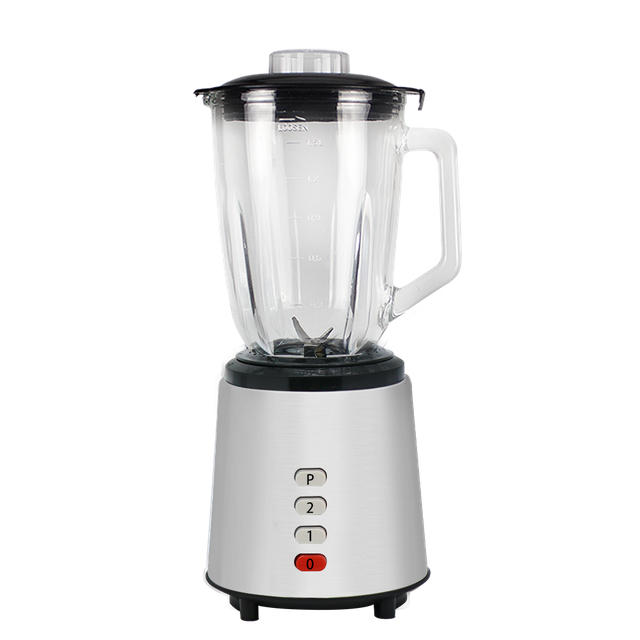
High-performance blenders are designed for smoothies, frozen drinks, soups, sauces, and nut butters. They require high torque, durable blades, and robust jar materials. Commercial models may use brushless motors, variable speed control, and thermal protection. Retail models may emphasize preset programs, digital displays, and compact footprints. The key specification is not only wattage but also blade geometry, jar shape, and motor cooling. A high-wattage motor with poor airflow can fail faster than a lower-wattage motor with better engineering.
Personal blenders and compact blenders serve single-serve and small-batch needs. They are popular in e-commerce, gift channels, and small households. B2B buyers should evaluate motor life, jar durability, leak resistance, and ease of cleaning. Because these products often sell at lower price points, quality control and packaging efficiency become critical to margin. A supplier with own moulds and stable production can help buyers avoid inconsistent fit and finish.
The motor is the heart of any juice blender solution. B2B buyers should ask about copper winding, stator and rotor design, brushless versus brushed construction, and duty cycle. A supplier that understands motor engineering can match the motor to the application instead of overstating wattage. For commercial use, continuous duty ratings and thermal cutoffs are essential. For retail, cost-effective brushed motors may be acceptable if quality control is strong. Transmission systems, couplings, and drive shafts also affect noise, torque transfer, and durability.
Blade and jar materials directly influence user safety, taste, and longevity. Stainless steel blades should resist rust and maintain sharpness. Jar materials must comply with food-contact regulations in the destination market. Tritan is popular for clarity and impact resistance. Glass offers premium feel but adds weight and breakage risk. Stainless steel is durable but opaque. B2B buyers should confirm material certificates and test reports, especially for markets with strict food-contact rules.
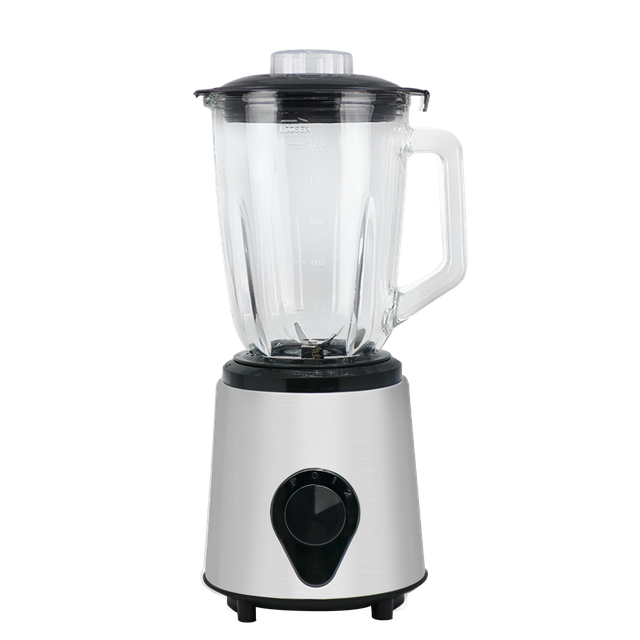
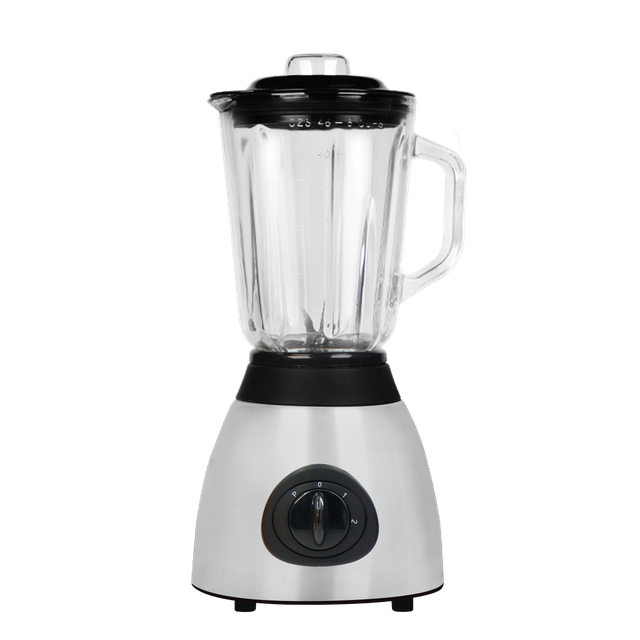
Speed control can be mechanical or electronic. Mechanical controls are robust and low cost. Electronic controls allow presets, pulse functions, and smart features. For B2B buyers, the choice depends on the target price and user expectations. A simple rotary switch may be ideal for a value-focused retailer. A digital interface with smoothie, ice crush, and soup programs may suit a premium brand. The supplier should provide clear user manuals, safety warnings, and language options for each market.
Noise and vibration are often overlooked until products reach the market. They affect customer reviews, return rates, and commercial usability. Motor mounts, rubber feet, housing rigidity, and blade balance all contribute to noise. Thermal management includes ventilation paths, heat sinks, and auto shutoff. B2B buyers should request noise test data and endurance test reports. A well-designed juice blender solution should run smoothly through repeated cycles without excessive heat or rattle.
Compliance is a non-negotiable part of B2B sourcing. Different markets require different certifications. CE is important for the European Union. CB certification supports international acceptance. GS is recognized in Germany and other European markets. RoHS restricts hazardous substances. ISO9001:2015 provides a quality management framework. B2B buyers should verify that the manufacturer operates under a documented quality system and can provide valid certificates for each product family.
TAIFAI states that its products have been approved for dozens of patents and that production follows ISO9001:2015 standards. The company also indicates that many products carry CE, CB, GS, and RoHS certification. For B2B buyers, these claims should be supported by certificates, test reports, and factory audit documents. A supplier with 50 patents and 50 own moulds can offer stronger intellectual property protection and more stable tooling. Own moulds also help control fit, finish, and production consistency.
Certifications reduce market access risk. Without the right approvals, shipments can be delayed, detained, or rejected. Retailers may refuse products that lack required marks. Insurance and liability policies may also depend on compliance. B2B buyers should not treat certification as a paperwork exercise. They should confirm the certificate scope, validity, and product model coverage. If a supplier claims CE, the buyer should see the declaration of conformity and relevant test reports.
Quality assurance should include incoming material inspection, in-process checks, finished product testing, and batch traceability. Key tests may include high-voltage insulation, grounding continuity, power consumption, motor endurance, leakage, drop test, and packaging compression. For juice blender solutions, motor life testing and jar impact testing are especially important. B2B buyers should ask for sampling plans, defect rates, and corrective action procedures. A supplier with a mature quality system can identify problems before shipment rather than after customer complaints.
B2B buyers often need more than a catalog product. They need a manufacturing partner that can adapt to brand requirements, price targets, and market regulations. TAIFAI supports OEM, ODM, and CKD cooperation. Each model offers different levels of control, investment, and speed.
OEM means original equipment manufacturing. The buyer provides the design, specifications, brand, and packaging requirements. The manufacturer produces according to those requirements. OEM is suitable for buyers with strong product development teams and clear intellectual property. It offers high brand control but requires more technical documentation and validation. A supplier with own moulds and patent experience can help reduce tooling risk and improve manufacturability.
ODM means original design manufacturing. The manufacturer offers a ready or customizable design that the buyer can brand. ODM is faster and often more cost-effective because the core design, tooling, and testing already exist. Buyers can request color changes, logo printing, packaging customization, voltage variations, and plug types. TAIFAI's product range includes electric blenders, juicers, citrus juicers, hand mixers, hand blenders, stand mixers, coffee grinders, choppers, and food processors, which gives ODM buyers a broad base for market-specific selection.
CKD means completely knocked down. The product is shipped in components for local assembly. CKD can reduce shipping volume, lower import duties in some markets, and support local job creation. However, CKD requires local assembly capability, quality control, and spare parts management. B2B buyers should evaluate whether the supplier can provide clear assembly instructions, fixtures, testing equipment, and training. CKD is most effective when volumes are high and the buyer has a reliable local operation.
B2B buyers should look beyond unit price. The true cost of a juice blender solution includes tooling, certification, packaging, freight, import duties, warranty claims, spare parts, and customer returns. A cheaper unit may create higher after-sales costs if the motor fails or the jar leaks. A more expensive unit may reduce returns and improve brand reputation. Buyers should calculate total cost of ownership for the expected product life and usage cycle.
Unit price is easy to compare, but it can be misleading. A supplier may quote a low price by using thinner materials, lower-grade motors, or simplified packaging. These choices may pass initial inspection but fail in the field. B2B buyers should request a bill of materials overview, motor specifications, material certificates, and warranty data. They should also consider minimum order quantities, payment terms, and lead times. A balanced evaluation includes price, quality, compliance, and service.
After-sales support is critical for retail and commercial channels. Buyers need access to jars, blades, seals, couplings, motors, and power cords. A supplier that maintains spare parts inventory and provides technical documentation can reduce downtime and customer dissatisfaction. Warranty policies should specify coverage period, claim process, and replacement conditions. For commercial juice blender solutions, fast spare parts availability can be more important than a slightly lower purchase price.
Packaging protects the product and sells the brand. Retail packaging must communicate features, benefits, certifications, and usage instructions. It must also survive shipping and store handling. B2B buyers should review packaging artwork, language requirements, barcodes, and regulatory warnings. For e-commerce, packaging must withstand drop tests and may need to be compact for shipping efficiency.
Private label programs require close coordination between the buyer and manufacturer. The supplier must manage logo placement, color matching, manual translation, and compliance statements. TAIFAI's OEM and ODM capabilities support private label development for kitchen electric appliances. Buyers can select existing models, request modifications, and build a differentiated product line without starting from zero.
Container loading affects freight cost and landed price. A well-designed package can increase units per container and reduce damage. B2B buyers should ask for carton dimensions, gross weight, and loading plans. Minimum order quantities should be realistic for both parties. A supplier with own moulds and flexible production can sometimes offer lower MOQs for new buyers or new market tests.
Several trends shape demand for juice blender solutions. Health-conscious consumers want fresh juice and smoothies. Commercial food service wants efficient equipment. Retailers want attractive designs and smart features. Sustainability pressures are pushing brands toward energy efficiency, recyclable packaging, and durable products. B2B buyers should align their product roadmap with these trends.
Health and wellness remains a powerful driver. Consumers associate fresh juice with vitamins, detox, and natural ingredients. Slow juicers and high-performance blenders benefit from this trend. Buyers can target premium health channels with nutrient-preserving designs and clear messaging. They can also target value channels with affordable centrifugal juicers and personal blenders.
Commercial food service requires durability, speed, and easy cleaning. Juice bars, hotels, restaurants, and cafes need machines that can run for hours. B2B buyers serving this segment should prioritize motor quality, thermal protection, spare parts, and service manuals. A commercial juice blender solution should be designed for repeated use, not occasional household use.
Sustainability is becoming a procurement criterion. Energy-efficient motors, recyclable packaging, and long product life reduce environmental impact. Buyers can ask suppliers about RoHS compliance, material selection, and repairability. Products that are easy to repair and maintain can reduce waste and improve brand image.
Jiangmen Taifai Technology Co.,Ltd is located in China, in Jiangmen City, Guangdong Province, a flourishing home appliances manufacturing base. Founded in 2007, the company is a high-tech enterprise with capabilities and services of independent research and development, production, and sales. TAIFAI's main products include electric blender, juicer, citrus juicer, hand mixer, hand blender, stand mixer, coffee grinder, chopper, and food processor. The company supports OEM, ODM, and CKD cooperation.
TAIFAI reports 50 patents and 50 own moulds. Its products have been approved for dozens of patents, and production follows ISO9001:2015 standards. The company insists on strict management of production operation and quality. Many products carry CE, CB, GS, and RoHS certification with design, performance, multi-functionality, and reasonable price. TAIFAI focuses on the manufacturing and service of kitchen electric appliances. It is a professional kitchen appliances manufacturer with excellent scale and technology in China. The company is a high quality kitchen electric appliances provider integrating design, research, development, production, sales, and service.
For B2B buyers, this profile suggests a supplier that can support product development, tooling, certification, and volume production. The combination of patents, own moulds, and international certifications can reduce risk for buyers entering new markets. TAIFAI's product range also allows buyers to consolidate sourcing across multiple kitchen appliance categories, which can simplify supplier management and logistics.
Sourcing risk can come from quality, compliance, supply chain, intellectual property, and currency. B2B buyers should build a risk management plan before placing large orders. This includes supplier audits, sample validation, pilot orders, and contract terms. A good supplier will welcome transparency and provide documentation.
Supply chain disruptions can delay production and increase costs. B2B buyers should understand where key components come from, how the supplier manages inventory, and what contingency plans exist. A manufacturer with own moulds and in-house production has more control over critical parts. Buyers should also discuss lead times, production capacity, and alternative logistics routes.
Intellectual property protection is important for branded products. Buyers should confirm that the supplier has the right to manufacture the design and that no third-party patents are infringed. A supplier with its own patents can offer stronger protection. Contracts should include confidentiality, tooling ownership, and patent indemnity clauses.
Warranty terms should be clear and practical. B2B buyers should define what is covered, how claims are submitted, and who pays for shipping. Return rates should be monitored by defect category. The supplier should provide corrective action reports for recurring issues. A strong warranty process protects the buyer's brand and reduces financial risk.
B2B buyers need more than a product catalog. They need a juice blender solution that matches the application, complies with market regulations, performs reliably, and supports the brand. The evaluation should cover product category, motor and blade engineering, materials, certifications, quality systems, OEM and ODM flexibility, CKD options, total cost of ownership, packaging, logistics, and after-sales support. Suppliers such as TAIFAI demonstrate how a manufacturer with independent research and development, production, sales, 50 patents, 50 own moulds, ISO9001:2015 production, and CE, CB, GS, and RoHS certifications can support B2B buyers across multiple kitchen appliance categories.
The most successful sourcing programs are built on clear specifications, transparent communication, and verified quality. B2B buyers should start with a defined use case, request samples and test reports, audit the factory, and pilot the product in the target market. By taking a structured approach, buyers can reduce risk, improve margins, and deliver juice blender solutions that meet customer expectations.
For B2B buyers, the right partner is not simply the lowest-cost supplier. It is the manufacturer that can combine design, engineering, tooling, certification, production, and service into a dependable supply program. Juice blender solutions are part of a broader kitchen electric appliance strategy. A supplier with proven patents, own moulds, quality systems, and international certifications can help buyers move faster and compete more effectively.


