


This guide provides a comprehensive framework for evaluating juice blender suppliers for high-volume programs. It explains why high-volume programs require a different approach than small orders, emphasizing total cost of ownership, risk, and long-term partnership. The guide covers fifteen core evaluation dimensions: manufacturing capability and capacity, quality management systems, product design and engineering, certifications and regulatory compliance, supply chain and material control, production process and automation, testing and validation, cost structure and pricing transparency, lead times and delivery performance, OEM/ODM/CKD flexibility, patents and intellectual property, mould ownership and tooling, after-sales support and warranty, sustainability and ethical sourcing, and communication and project management. It also provides a supplier scorecard, a site audit checklist, common pitfalls, negotiation and contract considerations, ramp-up planning, logistics and packaging guidance, and risk management strategies.
The guide uses Jiangmen Taifai Technology Co.,Ltd, known as TAIFAI, as an illustrative example. TAIFAI is located in Jiangmen City, Guangdong Province, China, and was founded in 2007. It is a high-tech enterprise with independent research and development, production, and sales. Its main products include electric blender, juicer, citrus juicer, hand mixer, hand blender, stand mixer, coffee grinder, chopper, and food processor. TAIFAI supports OEM, ODM, and CKD, holds 50 patents, and has 50 own moulds. Its production follows ISO9001:2015, and many products carry CE, CB, GS, and RoHS certification. These claims should be verified through documentation, factory audits, and sample testing.
By following the structured evaluation process, buyers can reduce risk, improve quality and delivery performance, and build a more resilient supply chain for high-volume juice blender programs.
High-volume juice blender programs demand a supplier evaluation process that goes far beyond comparing unit prices or reviewing a catalog. When a retailer, brand, or distributor commits to tens of thousands of units per month, every design flaw, quality escape, certification gap, or logistics delay becomes magnified. The right supplier can become a strategic partner that protects brand reputation, reduces total cost, and enables rapid market expansion. The wrong supplier can create recalls, stockouts, margin erosion, and legal exposure. This guide provides a structured, third-person approach to evaluating juice blender suppliers for high-volume programs. It covers capacity, quality, engineering, compliance, tooling, cost, delivery, risk, and long-term collaboration. It also offers practical scorecards, audit questions, and negotiation considerations. Throughout the guide, examples from established kitchen appliance manufacturers, including Jiangmen Taifai Technology Co.,Ltd, also known as TAIFAI, illustrate how a capable supplier may present its qualifications.
High-volume programs are not simply larger versions of small orders. They introduce a different risk profile, a different cost structure, and a different set of operational requirements. A supplier that performs well for a 5,000-unit seasonal order may struggle with a 50,000-unit monthly commitment. The evaluation process must therefore test whether the supplier can sustain quality, delivery, and cost over a prolonged period and across multiple production runs.
Volume amplifies every strength and every weakness. A small defect rate that seems acceptable in a pilot run can become thousands of defective units in mass production. A minor delay in component procurement can cascade into missed vessel bookings and empty retail shelves. A weak engineering change process can create version confusion across markets. A supplier with limited mould capacity may not be able to support rapid design iterations or new model introductions.
Buyers often begin with unit price, but high-volume programs require a total cost of ownership perspective. The true cost includes tooling amortization, packaging, freight, duties, inventory carrying costs, quality inspection, warranty claims, returns, and administrative overhead. A supplier with a slightly higher unit price but better quality and delivery reliability may deliver a lower total cost. Conversely, a low-cost supplier with poor process control can generate expensive surprises.
undefined
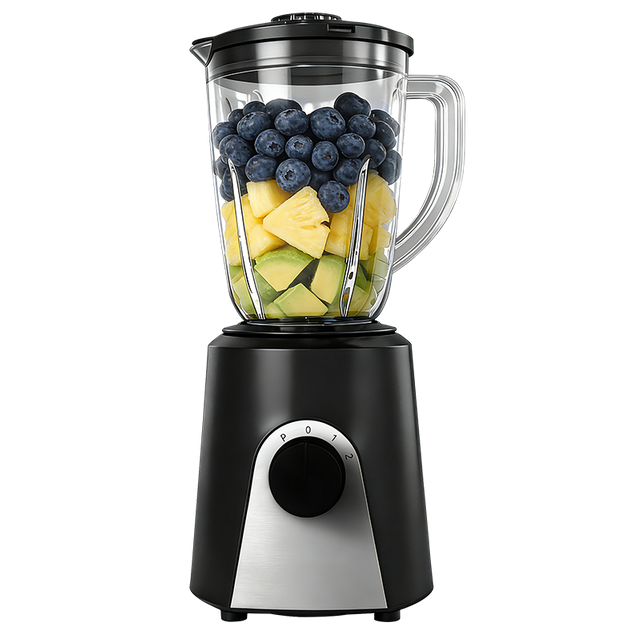
Total cost of ownership also includes the cost of risk. If a supplier cannot provide consistent certification documentation, the buyer may face customs delays or market withdrawal. If the supplier uses unstable materials, the blender may fail in the field and trigger returns. If the supplier cannot scale quickly, the buyer may lose promotional opportunities. These risks must be quantified and weighted in the evaluation.
High-volume programs typically last for multiple years. The supplier relationship should therefore be evaluated as a partnership rather than a transactional purchase. The buyer should assess whether the supplier has the financial stability, technical depth, and cultural commitment to support continuous improvement. The supplier should also evaluate whether the program aligns with its own capabilities and strategic direction. A mismatch in expectations can lead to friction even when the product itself is competitive.
A robust supplier evaluation framework for high-volume juice blender programs should cover at least fifteen dimensions. Each dimension should be scored using objective evidence, not just supplier claims. The framework should also include a weighting system that reflects the buyer's priorities. For example, a buyer launching a premium brand may weight engineering and certifications more heavily, while a buyer serving a price-sensitive market may weight cost and capacity more heavily.
The following sections describe each dimension in detail and provide questions, evidence requirements, and red flags.
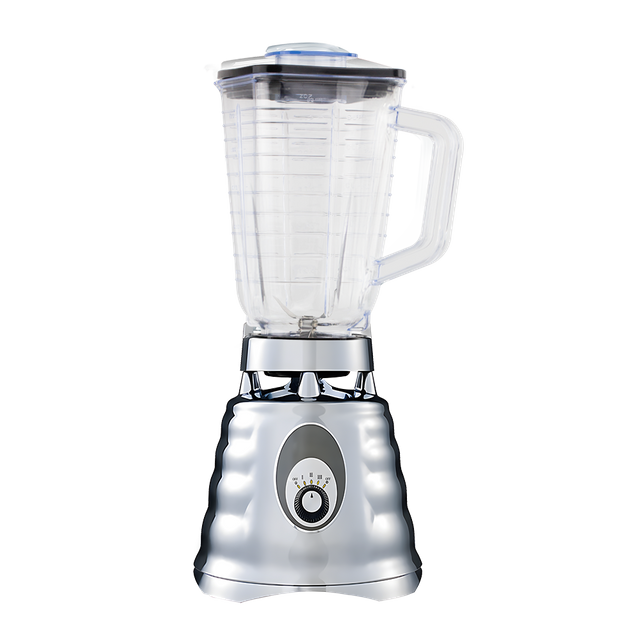
Manufacturing capability refers to the supplier's ability to produce the required product to specification. Capacity refers to the volume the supplier can produce within a given period without compromising quality or delivery. For high-volume juice blender programs, both must be verified.
Capability should be assessed by reviewing the supplier's production lines, equipment list, automation level, and workforce skills. The buyer should ask whether the supplier can handle the specific motor sizes, blade assemblies, jar materials, and electrical configurations required. The supplier should be able to demonstrate experience with similar products, not just general kitchen appliances.
Capacity should be assessed by reviewing historical output, current utilization, and expansion plans. The buyer should ask how many units per month the supplier can produce for the specific model, considering changeovers, maintenance, and peak season demand. The supplier should provide a capacity model that shows monthly output under normal and peak conditions.
Red flags include vague capacity numbers, no formal capacity model, high utilization with no expansion plan, and reliance on a single production line. A supplier that cannot clearly explain its capacity may not be able to support a high-volume program.
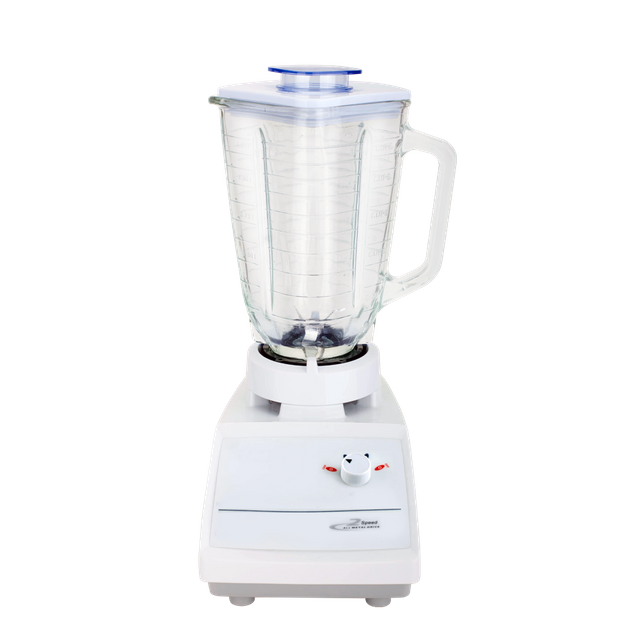
Quality management is the foundation of high-volume manufacturing. A supplier without a robust quality system will eventually produce defects at scale. The buyer should verify that the supplier has a documented quality management system, preferably certified to ISO9001:2015 or an equivalent standard.
The quality system should cover incoming material inspection, in-process controls, final inspection, calibration, non-conforming material control, corrective and preventive action, and continuous improvement. The buyer should review quality records, defect rates, and customer complaint trends. The supplier should be able to demonstrate that quality issues are tracked, analyzed, and resolved.
For juice blenders, specific quality risks include motor overheating, blade imbalance, jar leakage, switch failure, electrical safety, and noise levels. The supplier should have test protocols for each risk and should provide test data from production runs.
Red flags include no formal quality manual, missing inspection records, high turnover in quality staff, and a culture of blaming operators for defects rather than improving processes.
Product design and engineering determine whether the juice blender meets market requirements, safety standards, and cost targets. The supplier should have in-house engineering capabilities, including mechanical design, electrical design, motor selection, and packaging design. The buyer should assess whether the supplier can support OEM, ODM, or CKD models.
OEM means the supplier manufactures according to the buyer's design. ODM means the supplier provides a design that the buyer can customize. CKD means the supplier provides components or semi-knocked-down kits for local assembly. Each model requires different engineering support. A supplier with strong ODM capabilities can help the buyer reduce development time and cost. A supplier with strong OEM capabilities can execute complex buyer designs with precision.
The buyer should review the supplier's design process, including concept development, prototyping, design review, validation testing, and design transfer to production. The supplier should use computer-aided design tools, simulation, and design failure mode and effects analysis. The supplier should also have a formal engineering change process.
Red flags include no in-house engineering, reliance on external design firms, no formal design review, and inability to provide technical documentation.
Juice blenders are electrical appliances, so they must comply with the regulations of the destination markets. Common certifications include CE for Europe, CB for international acceptance, GS for Germany, RoHS for hazardous substances, and other national requirements. The supplier should have valid certificates for the proposed models and should be able to provide test reports.
Compliance is not a one-time event. Regulations change, and certificates expire. The buyer should verify that the supplier has a process for monitoring regulatory changes, updating certificates, and notifying customers. The supplier should also be able to support market-specific labeling, voltage, plug types, and language requirements.
For high-volume programs, compliance failures can lead to customs seizures, fines, recalls, and brand damage. The buyer should therefore treat certification as a critical pass or fail criterion. A supplier that cannot provide the required certificates should not be considered for the program.
Red flags include expired certificates, certificates that do not cover the proposed model, test reports from unaccredited laboratories, and refusal to share full documentation.
High-volume production depends on a reliable supply chain. The buyer should assess how the supplier manages its suppliers, especially for critical components such as motors, blades, jars, switches, and power cords. The supplier should have multiple approved sources for key components and should conduct regular supplier audits.
Material control is also important. The supplier should have a system for tracking material lots, verifying material composition, and preventing counterfeit or substandard materials. For food-contact parts, the supplier should use food-grade materials and maintain certificates of analysis.
The buyer should ask about lead times for critical components, minimum order quantities, and inventory strategies. The supplier should be able to maintain buffer stock for long-lead items without excessive cost. The supplier should also have a plan for supply disruptions.
Red flags include single-source dependency for critical components, no supplier audits, long lead times without buffer stock, and poor incoming inspection.
The production process determines consistency, efficiency, and scalability. The buyer should review the supplier's assembly line layout, work instructions, fixtures, and testing stations. The supplier should use standardized work and mistake-proofing where possible.
Automation can improve consistency and reduce labor cost, but it is not always necessary for every step. The buyer should assess whether the supplier has the right level of automation for the product and volume. For example, motor winding, blade balancing, and electrical testing may benefit from automation, while final assembly may be manual.
The supplier should have a production control system that tracks work orders, inventory, and quality data. The buyer should ask how the supplier schedules production, manages changeovers, and measures line efficiency.
Red flags include no standard work instructions, inconsistent testing, poor housekeeping, and high employee turnover on the line.
Testing and validation ensure that the juice blender meets performance, safety, and reliability requirements. The supplier should have a laboratory with the equipment to test motors, blades, jars, switches, and complete units. The supplier should also perform reliability testing, including life cycle, drop, vibration, and thermal tests.
The buyer should review the supplier's test protocols and acceptance criteria. The supplier should be able to provide test reports for prototype, pilot, and mass production stages. The buyer may also require third-party testing for certification and verification.
For high-volume programs, ongoing testing is essential. The supplier should perform routine tests on production samples and maintain records. The buyer should also conduct periodic audits and sample testing.
Red flags include no in-house lab, reliance on supplier declarations without test data, and no ongoing production testing.
Cost is always important, but high-volume programs require transparency. The buyer should understand the supplier's cost structure, including materials, labor, overhead, tooling, packaging, and profit. The supplier should provide a cost breakdown for the proposed model and should be willing to discuss cost reduction opportunities.
Pricing should be quoted with clear terms, including Incoterms, payment terms, minimum order quantities, and validity period. The buyer should also understand how price changes will be handled if material costs fluctuate. A supplier that refuses to discuss cost structure may not be a good partner for a long-term program.
The buyer should also consider tooling costs. If new moulds are required, the buyer should clarify ownership, amortization, and maintenance responsibilities. The supplier should provide a tooling schedule and cost breakdown.
Red flags include vague pricing, refusal to provide cost breakdown, unrealistic low prices, and hidden tooling or packaging charges.
Lead times and delivery performance are critical for high-volume programs. The buyer should ask for standard lead times for samples, pilot production, and mass production. The supplier should also provide historical on-time delivery data.
The buyer should understand the supplier's production planning process and how it handles expedited orders. The supplier should have a system for tracking orders and communicating status. The buyer should also assess the supplier's logistics capabilities, including export documentation, freight forwarding, and customs clearance.
For high-volume programs, the buyer may require a delivery schedule with regular shipments. The supplier should be able to meet the schedule consistently. The buyer should also have a contingency plan if the supplier misses a shipment.
Red flags include no delivery data, frequent delays, poor communication, and no contingency plan.
Different buyers require different levels of supplier involvement. OEM buyers provide the design and expect the supplier to manufacture to specification. ODM buyers expect the supplier to provide a design that can be customized. CKD buyers expect the supplier to provide components or kits for local assembly.
The supplier should be able to support the buyer's preferred model. For OEM, the supplier should have strong engineering and quality systems to execute the buyer's design. For ODM, the supplier should have a portfolio of proven designs and the ability to customize. For CKD, the supplier should have experience with packaging components, providing assembly instructions, and supporting local production.
The buyer should ask about the supplier's experience with each model and request examples. The supplier should also be able to provide references from other buyers.
Red flags include no experience with the required model, refusal to provide references, and unclear intellectual property protections.
Patents and intellectual property are important for high-volume programs, especially for ODM products. The supplier should have its own patents or licenses for the designs it offers. The buyer should verify that the product does not infringe on third-party patents.
The supplier should have a process for patent searches, freedom-to-operate analysis, and intellectual property protection. The buyer should also have a clear agreement on ownership of new designs, tooling, and trademarks.
For OEM products, the buyer should ensure that the supplier does not use the buyer's designs for other customers. The supplier should have confidentiality and non-disclosure agreements in place.
Red flags include no patents, unclear ownership, refusal to sign confidentiality agreements, and known patent disputes.
Moulds and tooling are critical assets for juice blender production. The buyer should understand who owns the moulds, who maintains them, and what happens if the relationship ends. The supplier should provide a tooling list with mould numbers, cavity counts, and maintenance records.
The buyer should also assess the supplier's mould-making capability. A supplier with in-house mould design and manufacturing can respond faster to design changes and reduce tooling costs. The supplier should have the equipment to maintain and repair moulds.
For high-volume programs, tooling capacity is important. The supplier should have enough moulds to meet production demand and should have a plan for replacing worn moulds.
Red flags include no tooling list, unclear ownership, no maintenance records, and reliance on external mould makers.
After-sales support and warranty are important for high-volume programs because defects and returns can be costly. The supplier should have a clear warranty policy, including coverage period, claim process, and replacement parts. The supplier should also provide technical support and spare parts.
The buyer should understand how the supplier handles warranty claims. The supplier should have a process for root cause analysis and corrective action. The buyer should also ask about the cost of spare parts and the availability of service documentation.
For high-volume programs, the buyer may require a service network or a local repair partner. The supplier should be able to support this requirement.
Red flags include no written warranty, slow response, expensive spare parts, and no failure analysis.
Sustainability and ethical sourcing are increasingly important for high-volume programs. Buyers may need to comply with environmental regulations, social responsibility standards, and customer expectations. The supplier should have policies and practices for environmental protection, labor rights, and ethical sourcing.
The buyer should ask about the supplier's environmental management system, energy use, waste management, and recycling. The supplier should also comply with labor laws, provide safe working conditions, and prohibit child labor and forced labor.
For food-contact products, the supplier should use sustainable materials where possible and avoid hazardous substances. The supplier should also have a process for conflict minerals and responsible sourcing.
Red flags include no environmental policy, poor working conditions, use of banned substances, and refusal to provide social responsibility documentation.
Communication and project management determine how smoothly the program runs. The supplier should have a dedicated project manager or account manager for the buyer. The supplier should also have a clear communication protocol, including regular meetings, status reports, and issue escalation.
The buyer should assess the supplier's responsiveness, language capabilities, and cultural fit. The supplier should be able to communicate in the buyer's language or provide reliable translation. The supplier should also use project management tools to track milestones, tasks, and risks.
For high-volume programs, communication is critical during development, ramp-up, and mass production. The buyer should have a single point of contact and a clear escalation path.
Red flags include slow responses, no dedicated contact, poor English or translation, and no formal project management.
A supplier scorecard helps buyers compare suppliers objectively. The scorecard should include the evaluation dimensions, weights, scores, and comments. The buyer should use the scorecard during supplier selection and as a tool for ongoing performance management.
The following table provides a sample scorecard. Weights can be adjusted based on the buyer's priorities.
| Evaluation Dimension | Weight | Score (1-10) | Weighted Score | Comments |
|---|---|---|---|---|
| Manufacturing Capability and Capacity | 10% | |||
| Quality Management Systems | 15% | |||
| Product Design and Engineering | 10% | |||
| Certifications and Regulatory Compliance | 10% | |||
| Supply Chain and Material Control | 8% | |||
| Production Process and Automation | 8% | |||
| Testing and Validation | 8% | |||
| Cost Structure and Pricing Transparency | 10% | |||
| Lead Times and Delivery Performance | 8% | |||
| OEM, ODM, and CKD Flexibility | 5% | |||
| Patents and Intellectual Property | 3% | |||
| Mould Ownership and Tooling | 3% | |||
| After-Sales Support and Warranty | 3% | |||
| Sustainability and Ethical Sourcing | 2% | |||
| Communication and Project Management | 2% |
The buyer should define a minimum passing score for each dimension and an overall minimum score. Suppliers that fail critical dimensions, such as certifications or quality systems, should be disqualified regardless of overall score.
A site audit is an essential part of supplier evaluation. The buyer should visit the supplier's factory to verify claims and observe operations. The audit should cover the following areas.
During the audit, the buyer should ask open-ended questions, request evidence, and observe actual practices. The buyer should also talk to line workers and quality inspectors to understand the real working environment.
Many buyers make avoidable mistakes during supplier evaluation. The following pitfalls are common in high-volume juice blender programs.
Unit price is easy to compare but misleading. A low unit price may hide poor quality, expensive tooling, or high logistics costs. Buyers should evaluate total cost of ownership.
Desk reviews and supplier presentations are not enough. A factory audit reveals the true state of operations, quality culture, and capacity. Buyers should always visit the factory before committing to a high-volume program.
Certificates can be expired, forged, or not applicable to the proposed model. Buyers should verify certificates with the issuing body and check the scope.
High-volume programs often require design changes, cost reductions, and new features. A supplier without strong engineering will struggle to support these needs.
Even a capable supplier needs time to ramp up production. Buyers should plan for pilot runs, trial orders, and gradual increases in volume. A sudden jump to full volume can cause quality and delivery problems.
Communication problems can derail a program even when the product is good. Buyers should assess language, responsiveness, and cultural fit during evaluation.
Buyers should plan for the possibility that the relationship may end. They should ensure that tooling, intellectual property, and spare parts are protected. Contracts should include exit clauses.
Jiangmen Taifai Technology Co.,Ltd, known as TAIFAI, provides an example of how a kitchen appliance manufacturer may present its qualifications for high-volume programs. The company is located in China, in Jiangmen City, Guangdong Province, a flourishing home appliances manufacturing base. Founded in 2007, TAIFAI is a high-tech enterprise with capabilities and services of independent research and development, production, and sales.
TAIFAI's main products include electric blender, juicer, citrus juicer, hand mixer, hand blender, stand mixer, coffee grinder, chopper, and food processor. This product range indicates experience with small kitchen appliances and motor-driven products, which is relevant for juice blender programs. The company supports OEM, ODM, and CKD models, giving buyers flexibility in how they structure the program.
TAIFAI reports 50 patents and 50 own moulds. Patents can indicate investment in design and intellectual property, while own moulds can support faster tooling changes and better control over production. The company states that its products have been approved for dozens of patents and that production follows ISO9001:2015 standards. It also emphasizes strict management of production operation and quality.
Many TAIFAI products carry CE, CB, GS, and RoHS certification. These certifications are important for European and international markets. The company describes its products as having fantastic design, good performance, multi-functional features, and reasonable prices. TAIFAI also positions itself as a professional kitchen appliances manufacturer with excellent scale and technology in China, integrating design, research, development, production, sales, and service.
When evaluating a supplier like TAIFAI, buyers should verify all claims through documentation, factory audits, and sample testing. The supplier's stated capabilities should be mapped against the buyer's specific requirements for capacity, quality, certifications, tooling, and delivery. A supplier spotlight is not an endorsement; it is a starting point for due diligence.
Negotiation for high-volume programs should go beyond price. The buyer and supplier should agree on quality standards, delivery schedules, payment terms, tooling ownership, intellectual property, warranty, and risk allocation. The contract should be detailed and enforceable.
The buyer should also include performance incentives and penalties. For example, the contract may include a bonus for high on-time delivery or a penalty for quality failures. The buyer should ensure that the contract is reviewed by legal counsel.
Scaling from pilot production to full volume is a critical phase. The buyer and supplier should create a ramp-up plan with clear milestones, responsibilities, and timelines. The plan should include trial runs, first article inspection, process validation, and gradual volume increases.
The buyer should also plan for contingencies. If the supplier cannot meet the ramp-up schedule, the buyer should have alternative sources or inventory buffers. The buyer should also monitor quality and delivery closely during ramp-up.
Logistics and packaging are often overlooked but can significantly affect cost and customer satisfaction. The buyer should evaluate the supplier's packaging design, materials, and testing. Packaging must protect the product during transportation and present well at retail.
The buyer should also assess the supplier's logistics capabilities, including container loading, freight forwarding, and customs documentation. The supplier should be able to provide the required export documents and comply with labeling regulations.
Red flags include flimsy packaging, missing labels, poor drop-test results, and inability to customize for retail.
High-volume programs face a range of risks, including quality failures, supply chain disruptions, natural disasters, political instability, and currency fluctuations. The buyer should work with the supplier to identify and mitigate these risks.
The buyer should also monitor the supplier's financial health and operational performance. Early warning signs, such as late deliveries or quality declines, should trigger corrective action.
Evaluating a juice blender supplier for a high-volume program requires a disciplined, evidence-based approach. Buyers should assess manufacturing capability, quality systems, engineering, certifications, supply chain, production processes, testing, cost, delivery, OEM/ODM/CKD flexibility, patents, tooling, after-sales support, sustainability, and communication. A supplier scorecard and site audit can help compare suppliers objectively. Negotiation and contracts should address all key terms, including quality, delivery, tooling, intellectual property, and risk. Ramp-up planning, logistics, and risk management are essential for a successful launch and long-term partnership.
Suppliers such as Jiangmen Taifai Technology Co.,Ltd, known as TAIFAI, illustrate the type of capabilities that buyers may look for. TAIFAI is located in Jiangmen City, Guangdong Province, China, and was founded in 2007. It is a high-tech enterprise with independent research and development, production, and sales. Its main products include electric blender, juicer, citrus juicer, hand mixer, hand blender, stand mixer, coffee grinder, chopper, and food processor. The company supports OEM, ODM, and CKD, holds 50 patents, and has 50 own moulds. Its production follows ISO9001:2015, and many products carry CE, CB, GS, and RoHS certification. These attributes can be relevant for buyers seeking a kitchen appliance partner, but they must be verified through due diligence.
Ultimately, the best supplier is not necessarily the one with the lowest price or the largest factory. The best supplier is the one that can consistently meet the buyer's requirements for quality, delivery, compliance, and cost over the life of the program. By using a structured evaluation guide, buyers can reduce risk, improve performance, and build a more resilient supply chain for high-volume juice blender programs.


