


This article presents a comprehensive checklist for OEM and private label juice blender programs. It explains why a structured approach is essential for product safety, certification, performance, and supply chain reliability. The article covers program models including OEM, ODM, private label, and CKD, and outlines key considerations for target market positioning, voltage, plug type, and regulatory compliance. It details certification requirements such as CE, CB, GS, and RoHS, and emphasizes food-contact material testing for jars, lids, blades, gaskets, and citrus cones. Motor power, speed, duty cycle, ice crushing, and continuous operation tests are discussed as core performance criteria. Blade geometry, jar capacity, lid sealing, and citrus juicing design are reviewed for usability and durability. Safety systems such as interlock switches, thermal protection, non-slip feet, and warning labels are highlighted. The article also covers controls, electronics, noise, vibration, life testing, packaging, branding, manuals, quality assurance, AQL inspection, and factory audits. Commercial topics include tooling ownership, mold maintenance, MOQs, cost breakdown, sampling stages, production timelines, logistics, after-sales, warranty, sustainability, and intellectual property. It notes common pitfalls such as choosing on price alone, ignoring certification, approving unproducible samples, and skipping pre-shipment inspection. The article references Jiangmen Taifai Technology Co.,Ltd, known as TAIFAI, founded in 2007 in Jiangmen City, Guangdong Province, China. TAIFAI supports OEM, ODM, and CKD programs, holds 50 patents and 50 own molds, follows ISO9001:2015, and offers products with CE, CB, GS, and RoHS certification. The summary concludes that a rigorous checklist helps brands and manufacturers align design, compliance, manufacturing, and brand strategy for successful juice blender programs.
A juice blender program is not simply a purchase order for a kitchen appliance. It is a coordinated product, compliance, manufacturing, and brand exercise that begins long before the first container leaves the factory. For brands, retailers, distributors, and importers entering the juicer and blender category, the difference between a profitable private label line and a costly inventory mistake often comes down to the rigor of the checklist used during supplier selection, product development, sampling, certification, and mass production. This article presents a detailed checklist for OEM and private label juice blender programs, with practical attention to performance, safety, compliance, tooling, packaging, quality assurance, and long-term supply chain reliability.
Third-party manufacturers and brand owners increasingly collaborate across borders. A private label program may involve a blender with a custom logo, a unique color, a branded gift box, and a market-specific plug. An OEM program may require a completely new motor housing, a patented blade assembly, or a proprietary citrus juicing attachment. An ODM program may begin with an existing platform that is adapted for a specific region. In each case, the same fundamental questions apply: Is the product safe? Is it certified? Is it durable? Can it be manufactured at scale? Does it meet the target price? Can the supplier protect the brand and deliver on time?
undefined
Juice blenders sit at the intersection of food contact, electrical safety, mechanical performance, and consumer convenience. They are used with acidic fruits, fibrous vegetables, ice, and sometimes hot liquids. They are handled by consumers who may overload the jar, operate the unit continuously, or clean it incorrectly. A weak checklist can lead to returns, safety notices, certification failures, and reputational damage. A strong checklist creates a shared language between the brand and the manufacturer. It turns vague expectations into measurable requirements and ensures that every stakeholder understands the difference between a cosmetic sample and a production-ready unit.
For OEM and private label programs, the checklist should cover at least ten areas: product definition, regulatory compliance, motor and performance, blade and jar design, safety systems, materials, electronics, noise and vibration, packaging and branding, and factory quality systems. Each area should have clear acceptance criteria, test methods, and responsible parties. The checklist should also include commercial items such as minimum order quantity, tooling ownership, mold maintenance, warranty terms, and spare parts availability.
Before technical details are discussed, the brand and manufacturer must agree on the program model. OEM means the manufacturer produces according to the brand's design, specifications, and often its molds. ODM means the manufacturer offers a developed product that the brand can customize. Private label typically means the product is manufactured under the brand's name, often using an existing or semi-custom platform. CKD means complete knock-down, where the product is shipped in parts for assembly in the destination market. Each model affects cost, lead time, intellectual property, and certification responsibility.
In an OEM juice blender program, the brand usually controls the industrial design, the user interface, the packaging artwork, and the performance targets. The manufacturer must verify that the design can be molded, assembled, tested, and certified at the target cost. The checklist should confirm ownership of tooling, exclusivity of design, and responsibility for any patent infringement. The brand should also confirm whether the manufacturer can support engineering changes without disrupting mass production.
ODM programs move faster because the core platform already exists. The checklist should focus on customization boundaries: logo printing, color matching, handle design, jar capacity, speed settings, and packaging. The brand should ask whether the ODM platform has existing certifications that can be extended to the new brand, or whether new testing is required. It is also important to confirm that the ODM product is not being sold to direct competitors in the same market with identical外观 and conflicting claims.
Private label juice blender programs often target retail shelves, e-commerce marketplaces, and discount channels. The checklist should emphasize packaging compliance, barcode requirements, retailer-specific testing, and shipping mark accuracy. The brand should verify that the manufacturer can handle small initial runs and scale up as demand grows. Private label success depends on consistent quality from the first container to the tenth, so the factory's process control and incoming material inspection are critical.
CKD programs can reduce freight costs and tariffs in some markets, but they require detailed assembly instructions, quality control at the destination, and clear responsibility for warranty. The checklist should include part numbering, packaging protection, missing-part procedures, and training for local assembly teams. The manufacturer must also confirm that CKD versions meet the same safety and performance standards as fully assembled units.
A juice blender checklist cannot be generic. A personal blender for smoothies has different requirements from a 1000-watt countertop blender for family use or a citrus juicer for breakfast service. The brand should define the target market, retail price, user profile, and usage occasions. Key questions include: Is the product intended for daily smoothies, occasional juicing, or professional food preparation? What jar capacity is expected? Should the unit crush ice? Should it handle frozen fruit? Should it be quiet? Should it be easy to clean? Should it include a travel bottle, a citrus cone, or a food processing attachment?
The target market also determines voltage, plug type, language requirements, and certification. A model for North America may require UL or ETL listing. A model for Europe may require CE, CB, GS, and RoHS. A model for the Middle East may require SASO or G-mark. A model for Australia may require SAA. The checklist should map every destination market to its mandatory and voluntary requirements before tooling is cut.
Certification is one of the most common causes of delay in juice blender programs. The brand should ask the manufacturer for valid certificates, test reports, and declaration of conformity. The checklist should include electrical safety, electromagnetic compatibility, food contact materials, and chemical restrictions. For example, CE, CB, GS, and RoHS are frequently requested in European and international markets. The manufacturer should be able to provide reports from recognized laboratories and maintain traceability between the certificate and the exact production model.
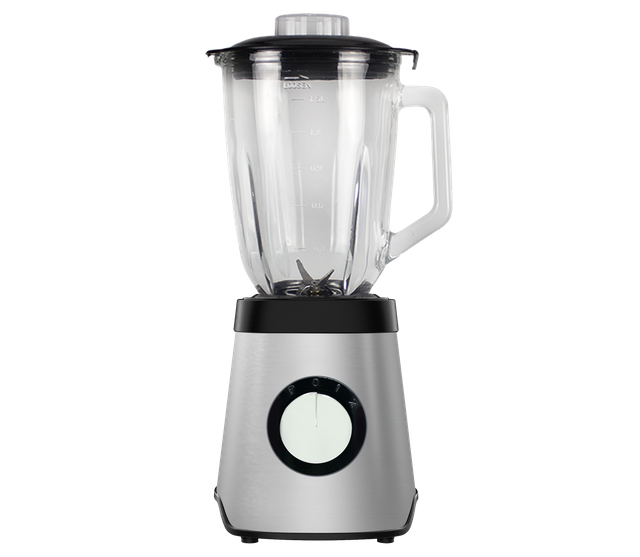
The motor is the heart of a juice blender. The checklist should specify rated voltage, frequency, power, no-load speed, loaded speed, duty cycle, and thermal protection. A blender that claims 1000 watts but cannot maintain speed under load will disappoint consumers. The brand should request performance curves, ice crushing tests, and continuous operation tests. The manufacturer should also confirm the motor's insulation class, bearing type, carbon brush life, and copper content. For private label programs, the motor specification should be locked before mass production because changes can affect certification, cost, and user experience.
Performance testing should cover typical recipes: smoothies with frozen fruit, juices with fibrous vegetables, nut milks, sauces, and crushed ice. The checklist should define the maximum load, the maximum continuous run time, and the rest time between cycles. It should also define the acceptable particle size, foam level, and temperature rise. A good manufacturer will document these tests and provide samples for the brand's own validation.
Blade geometry affects blending efficiency, cleaning, and safety. The checklist should specify blade material, thickness, coating, number of blades, and assembly method. Stainless steel grade, hardness, and corrosion resistance should be confirmed. The jar should be designed for easy pouring, comfortable handling, and secure locking. If the product includes a citrus juicer, the cone and strainer must be sized for common fruit and must be easy to remove and clean.
Jar capacity should be measured in liters or ounces and tested with real recipes. The brand should confirm whether the marked capacity is the maximum liquid capacity or the working capacity. The lid should seal securely, with a removable cap for adding ingredients. The spout should pour without dripping. The handle should withstand repeated lifting. For private label programs, the jar and lid can be customized with color, transparency, and logo placement, but these changes must not compromise safety or certification.
Safety is non-negotiable in juice blender programs. The checklist should include interlock switches that prevent operation unless the jar and lid are correctly positioned. Overheat protection should shut down the motor before damage occurs. The base should have non-slip feet and stable geometry. The cord should be long enough for countertop use but not so long that it creates a hazard. Sharp blades should be shielded during assembly and packaging.
The manufacturer should provide evidence of abnormal operation tests: locked rotor, overload, continuous running, voltage fluctuation, and component failure. The product should also pass drop tests, stability tests, and cleaning tests. Warning labels should be durable, legible, and in the required language. The instruction manual should explain safe assembly, operation, cleaning, and troubleshooting.
All parts that contact food must be safe and compliant. The checklist should identify every food-contact material: jar, lid, gasket, blade, shaft, filter, citrus cone, and any measuring cup. The brand should request material declarations, migration test reports, and temperature resistance data. Plastics should be BPA-free where required. Glass jars should be tempered and resistant to thermal shock. Silicone gaskets should be odorless and durable. Metal parts should resist corrosion from acidic juices.
Material selection also affects user experience. Tritan, polycarbonate, glass, and stainless steel each have advantages and trade-offs. The brand should decide based on target price, clarity, weight, durability, and market expectations. The manufacturer should confirm that the chosen material is available in consistent quality and can be molded or sourced without long lead times.
The control panel should be intuitive, durable, and easy to clean. The checklist should specify button or dial type, speed settings, pulse function, LED indicators, and any digital display. Electronics should be protected from moisture and heat. The membrane switch or dial should survive repeated use. The brand should test the user interface with real consumers if possible.
For smart or programmable models, the checklist should include firmware version, EMC testing, and cybersecurity where applicable. However, most juice blender programs do not require connectivity. Simplicity often improves reliability and reduces cost. The manufacturer should provide clear wiring diagrams, component specifications, and spare part numbers.
Noise is a common consumer complaint. The checklist should define an acceptable sound pressure level under load and at a specified distance. Vibration should be controlled through motor mounting, balancing, and base design. Durability testing should include repeated assembly and disassembly of the jar, lid, and blade assembly. The manufacturer should run life tests that simulate years of use: thousands of cycles, repeated washing, and thermal cycling.
Durability also depends on packaging and shipping. The checklist should include drop tests for the retail box and master carton. The product should survive typical logistics handling without cracks, loose parts, or cosmetic damage. The brand should review packaging materials for strength, cushioning, and sustainability.
Packaging is part of the product experience and a legal requirement in many markets. The checklist should cover artwork, barcodes, country of origin, warnings, recycling symbols, and language versions. The brand should approve a digital proof and a physical pre-production sample before mass printing. The manufacturer should confirm that the packaging line can handle the required carton size, insert, and label placement.
Manuals should be written in clear language and translated accurately. They should include specifications, safety warnings, operating instructions, cleaning instructions, troubleshooting, and warranty information. The brand should verify that the manual matches the actual product configuration and certification. A mismatch between the manual and the product can cause customs delays and consumer confusion.
A juice blender OEM or private label program should be supported by a documented quality management system. The manufacturer should follow ISO9001:2015 or an equivalent standard. The checklist should include incoming material inspection, in-process inspection, final inspection, and pre-shipment inspection. Key tests include high-voltage, grounding continuity, power consumption, speed, leakage current, and functional operation. The brand should define the AQL sampling plan and the acceptance criteria for major, minor, and critical defects.
The factory should maintain traceability by batch, date code, and component supplier. If a defect is found, the manufacturer should be able to identify the affected units and take corrective action. The brand should also request test reports for each production lot, especially for safety-critical components.
Before placing a large order, the brand should audit the factory or rely on a credible third-party audit. The checklist should cover legal registration, factory size, production capacity, equipment, calibration, and workforce. It should also review the factory's experience with blenders, juicers, and similar appliances. The brand should ask about existing customers, export markets, and certification history.
Jiangmen Taifai Technology Co.,Ltd, known as TAIFAI, is an example of a manufacturer that supports these requirements. Located in Jiangmen City, Guangdong Province, China, a flourishing home appliances manufacturing base, TAIFAI was founded in 2007 as a high-tech enterprise with independent research and development, production, and sales capabilities. The company produces electric blenders, juicers, citrus juicers, hand mixers, hand blenders, stand mixers, coffee grinders, choppers, and food processors. It supports OEM, ODM, and CKD programs, holds 50 patents, and owns 50 molds. Its production follows ISO9001:2015, and many products carry CE, CB, GS, and RoHS certification. TAIFAI is recognized as a professional kitchen appliance manufacturer integrating design, research, development, production, sales, and service.
Tooling and molds are major investments in OEM juice blender programs. The checklist should state who owns the molds, who pays for maintenance, and what happens when the program ends. The brand should receive mold drawings, material specifications, and maintenance records. If the manufacturer owns 50 molds or more, as TAIFAI does, the brand may benefit from faster sampling and lower tooling risk. However, exclusivity must still be documented.
Minimum order quantity should be negotiated based on tooling, packaging, and component sourcing. The brand should understand the cost drivers: motor, jar material, blade assembly, electronics, packaging, certification, and freight. A low unit price may hide higher MOQs, expensive tooling, or limited warranty. The checklist should include a full cost breakdown and a price validity period.
The sampling process should follow a clear sequence: concept sample, engineering sample, pre-production sample, and golden sample. Each stage should have defined approval criteria. The brand should test performance, safety, packaging, and user experience. The manufacturer should document changes and obtain written approval before mass production. The timeline should include mold making, trial production, certification, packaging printing, and shipping. A realistic schedule prevents rushed production and quality problems.
Logistics planning should cover carton dimensions, container loading, palletization, shipping marks, and insurance. The brand should confirm Incoterms, lead time, and port of departure. After-sales support should include spare parts, technical documentation, and warranty terms. The checklist should define the defect rate threshold, replacement policy, and response time. A manufacturer that provides clear after-sales procedures protects the brand's reputation.
Sustainability is increasingly important in private label programs. The checklist should consider recyclable packaging, reduced plastic, energy-efficient motors, and responsible sourcing. The brand should ask about waste management, worker safety, and ethical labor practices. These factors can influence retailer acceptance and consumer trust.
Intellectual property should be addressed early. The brand should confirm that the product design does not infringe existing patents. The manufacturer should provide design ownership or licensing documents. If the brand develops a new blade or jar, the parties should agree on patent ownership and confidentiality. TAIFAI's 50 patents and 50 own molds illustrate how a manufacturer can support differentiated designs while protecting its own innovations.
The category continues to evolve. Personal blenders, vacuum blending, quiet technology, and sustainable materials are gaining attention. Brands are asking for smaller MOQs, faster sampling, and more customization. Manufacturers that invest in R&D, molds, and certification can support these trends. A strong checklist helps both sides adapt without sacrificing safety or quality.
A juice blender checklist for OEM and private label programs is more than a document. It is a risk management tool that aligns design, compliance, manufacturing, and brand strategy. By asking the right questions early, brands can avoid costly delays and deliver a product that performs well, meets regulations, and delights consumers. Manufacturers such as Jiangmen Taifai Technology Co.,Ltd, with its OEM, ODM, and CKD capabilities, 50 patents, 50 own molds, ISO9001:2015 production, and CE, CB, GS, and RoHS certifications, demonstrate how a professional kitchen appliance partner can support a successful program from concept to container.


