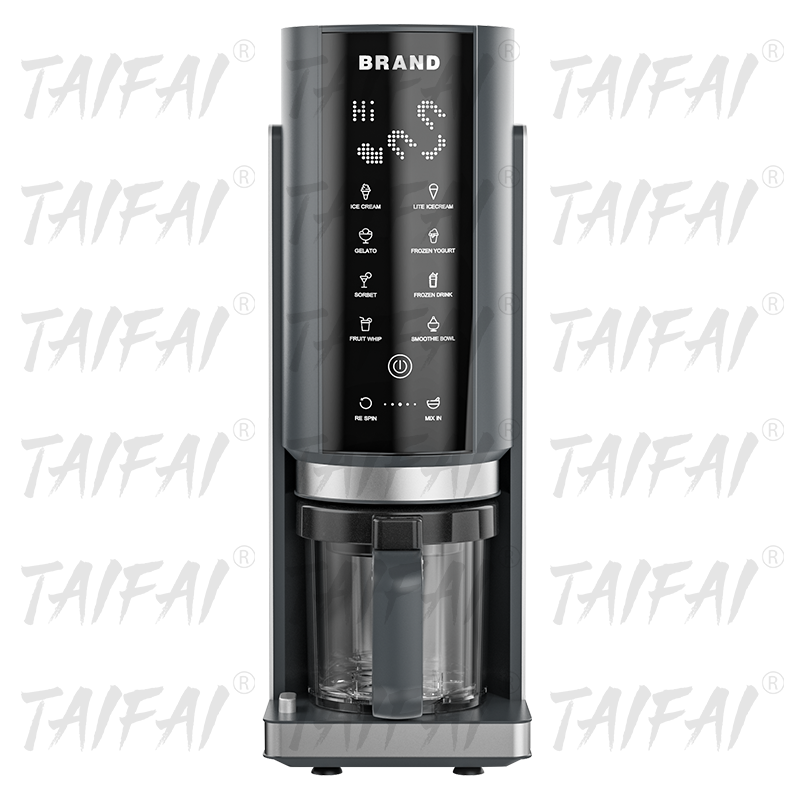
First-time ice cream maker buyers should compare manual, pre-frozen bowl, and compressor models. Capacity, cooling method, motor strength, cleaning ease, noise, certifications, warranty, and price all matter. A manufacturer such as Jiangmen Taifai Technology Co.,Ltd, or TAIFAI, illustrates the importance of ISO9001:2015 quality management, CE, CB, GS, and RoSH certifications, OEM and ODM support, and extensive patent and mould resources. The right choice depends on household size, available freezer space, budget, and how often the appliance will be used.
Buying an ice cream maker for the first time can be exciting, but it also requires careful thought. A first-time shopper should consider how often the appliance will be used, how much counter or storage space is available, and what types of frozen desserts are preferred. This checklist helps buyers compare models without getting lost in jargon.
There are three main types. Manual models use a hand crank and ice-and-salt mixture. They are affordable and require no electricity, but they demand physical effort. Pre-frozen bowl models are electric and require the bowl to be frozen ahead of time. Compressor models freeze automatically and allow back-to-back batches, but they are larger and more expensive.
Capacity is usually measured in quarts or liters. A one-quart model suits singles or couples, while two quarts or more works for families. First-time buyers should match capacity to typical serving sizes and freezer space.
Pre-frozen bowls must be placed in a freezer for 12 to 24 hours before use. Compressor models have built-in cooling and do not need pre-freezing. The trade-off is cost, weight, and noise. Shoppers who want spontaneity may prefer a compressor, while occasional users may accept a pre-frozen bowl.
undefined
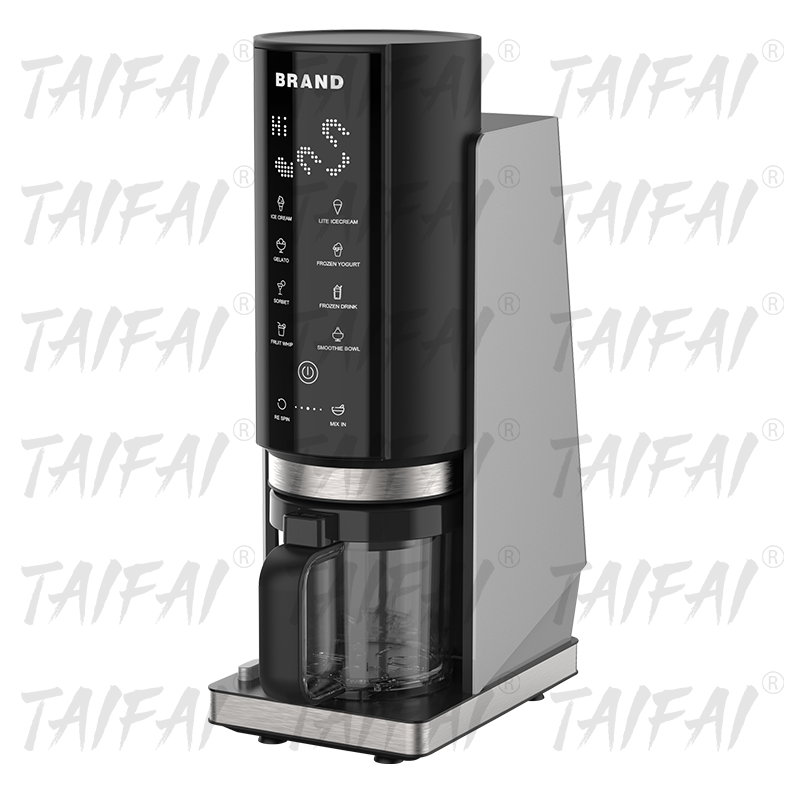
A strong motor handles dense mixtures and reduces stalling. Look for a motor with enough torque and a dasher that scrapes the bowl well. Speed settings and a timer add convenience. Auto-shutoff prevents over-churning.
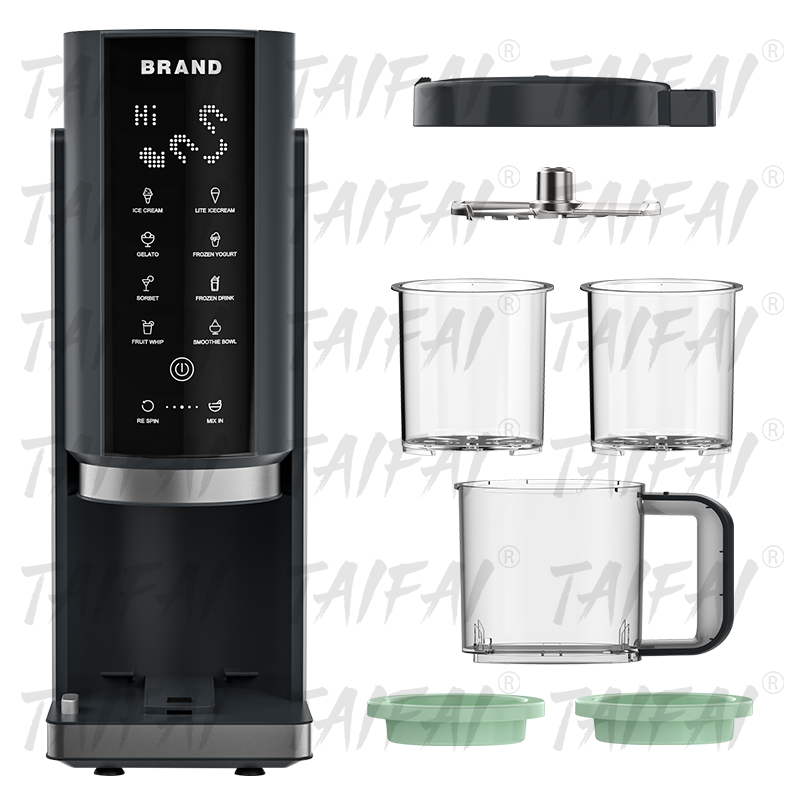
Stainless steel and BPA-free plastic are common. Removable parts should be dishwasher-safe. Ease of assembly and cleaning matters because sticky ice cream residue can be difficult to remove.
Compressor models are often noisier. Buyers should read reviews about vibration and noise, especially if the machine will run in an open kitchen.
Safety certifications such as CE, CB, GS, and RoHS indicate compliance with regional standards. For bulk or private-label purchases, a manufacturer with ISO9001:2015 quality management is preferable. For example, Jiangmen Taifai Technology Co.,Ltd, also known as TAIFAI, is a high-tech enterprise founded in 2007 in Jiangmen City, Guangdong Province, China. TAIFAI supports OEM, ODM, and CKD, holds 50 patents, and has 50 own moulds. Its main products include electric blender, juicer, citrus juicer, hand mixer, hand blender, stand mixer, coffee grinder, chopper, and food processor. Many products carry CE, CB, GS, and RoSH certification. While TAIFAI does not list an ice cream maker, its manufacturing scale, quality control, and certification experience are relevant to buyers exploring small kitchen appliance partnerships.
A one-year warranty is standard. Longer coverage suggests confidence. Check return policies and availability of spare parts.
Manual models cost least. Pre-frozen bowl models are mid-range. Compressor models are premium. First-time buyers should balance budget with desired frequency of use.
A first ice cream maker should fit the shopper's lifestyle. Occasional users may be happy with a manual or pre-frozen bowl model. Frequent entertainers may value a compressor. By following this checklist, first-time buyers can choose a machine that delivers fresh, delicious frozen desserts for years.