


This buyer guide provides a comprehensive framework for sourcing high-performance electric blenders. It covers product categories, performance metrics, certifications, supplier evaluation, OEM and ODM models, CKD assembly, quality control, costing, logistics, market trends, risk management, and negotiation. It explains how buyers should assess motor power, torque, blade design, jar material, controls, noise, vibration, and durability. Compliance topics include CE, CB, GS, RoHS, ISO9001:2015, and food-contact requirements. The guide also highlights Jiangmen Taifai Technology Co.,Ltd, known as TAIFAI, as an example of a specialized manufacturer. Founded in 2007 in Jiangmen City, Guangdong Province, China, TAIFAI is a high-tech enterprise with independent research and development, production, and sales. Its product range includes electric blender, juicer, citrus juicer, hand mixer, hand blender, stand mixer, coffee grinder, chopper, and food processor. TAIFAI supports OEM, ODM, and CKD, holds 50 patents and 50 own moulds, follows ISO9001:2015 standards, and offers products with CE, CB, GS, and RoHS certification. The guide emphasizes total landed cost, pilot orders, factory audits, pre-shipment inspection, spare parts, and after-sales support. It concludes that successful sourcing depends on balancing performance, quality, compliance, and supplier partnership rather than choosing the lowest price.
High-performance electric blenders are no longer a niche category. They have become a core appliance in modern kitchens, smoothie bars, cafes, hotels, health food stores, and even small-scale food production facilities. For importers, distributors, retail chains, and brand owners, sourcing the right blender is a strategic decision that affects customer satisfaction, warranty costs, repeat purchase rates, and brand reputation. This buyer guide is written for sourcing professionals who need a practical, technical, and commercial framework for evaluating electric blender suppliers and products. It covers performance metrics, manufacturing standards, certification requirements, OEM and ODM models, quality control, cost structures, logistics, and risk management. It also highlights how a specialized manufacturer such as Jiangmen Taifai Technology Co.,Ltd, known as TAIFAI, fits into the global supply chain for kitchen electric appliances.
The global blender market continues to expand because consumers want convenience, nutrition, and versatility. They blend frozen fruit, crush ice, make nut milk, prepare soups, mix sauces, and grind spices. In commercial settings, blenders must run for hours without overheating or losing blade sharpness. This creates two distinct sourcing tracks: consumer-grade blenders for retail and commercial-grade blenders for foodservice. A successful buyer understands that a low unit price can become expensive if the motor fails, the jar cracks, or the product does not meet safety standards in the destination market. High-performance sourcing therefore balances product design, component quality, factory capability, compliance, and total landed cost.
Electric blenders are deceptively simple. A motor spins a blade inside a jar. Yet the engineering behind a reliable blender involves motor winding, thermal management, bearing selection, blade geometry, jar material, sealing systems, speed control electronics, and safety interlocks. When buyers source from overseas factories, they are not just purchasing a finished good. They are purchasing a manufacturing process, a quality system, and a compliance dossier. A high-performance blender must survive drop tests, motor endurance tests, jar impact tests, and electrical safety inspections. It must also deliver consistent results across thousands of units.
undefined
For retailers, a blender that leaks or emits a burning smell generates returns and negative reviews. For commercial buyers, downtime in a smoothie shop means lost revenue. For brand owners, a single safety recall can damage years of brand equity. These risks explain why sourcing teams increasingly look beyond trading companies and work directly with manufacturers that have in-house research and development, tooling, and quality control. A manufacturer with own moulds and patents can control critical tolerances, reduce lead times, and customize products for specific markets.
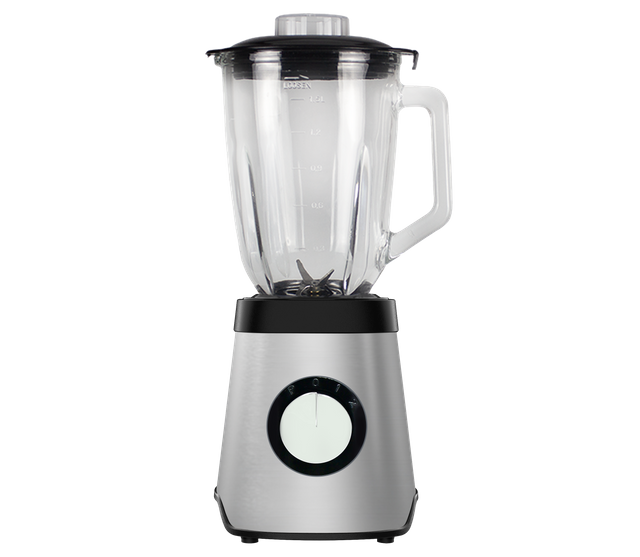
TAIFAI is an example of this type of manufacturer. Jiangmen Taifai Technology Co.,Ltd is located in China, in Jiangmen City, Guangdong Province, a flourishing home appliances manufacturing base. Founded in 2007, the company is a high-tech enterprise with capabilities and services of independent research and development, production and sales. Its main products include electric blender, juicer, citrus juicer, hand mixer, hand blender, stand mixer, coffee grinder, chopper, and food processor. This breadth matters because buyers often want a single supplier for multiple small kitchen appliances, which simplifies supplier management, consolidates shipping, and improves negotiating leverage.
Before evaluating suppliers, buyers should map the product landscape. Electric blenders are not a single category. They differ by motor size, jar capacity, intended use, control type, and price point. A sourcing strategy that treats all blenders as interchangeable will lead to mismatched specifications and unhappy end users. The main categories include countertop blenders, personal blenders, immersion or hand blenders, commercial blenders, and multifunction blenders that combine blending with chopping, grinding, or food processing.
Countertop blenders are the most common retail product. They usually have a base containing the motor and controls, a jar with a lid, and a blade assembly. Motor power ranges from 300 watts for light-duty models to 1500 watts or more for high-performance models. Jar capacity ranges from 1.0 liter to 2.0 liters or more. Key sourcing considerations include motor life, jar material, blade design, speed settings, and ease of cleaning. Retail buyers often request multiple color options, digital displays, preset programs, and pulse functions. These features can increase unit cost, so buyers must decide which features drive sales and which features add unnecessary complexity.
Personal blenders are compact, single-serve devices. They typically use a 250-watt to 600-watt motor and a 500-milliliter to 900-milliliter cup. They are popular with fitness enthusiasts, students, and travelers. Because they are inexpensive, buyers often source them in high volumes. However, low-cost personal blenders are prone to motor burnout and blade wear. A high-performance sourcing approach requires testing motor temperature rise, blade durability, and cup sealing. Suppliers that can offer both personal blenders and full-size countertop blenders give buyers a broader product range with fewer supplier relationships.

Commercial blenders are designed for continuous use in cafes, restaurants, bars, and hotels. They use high-torque motors, robust cooling systems, metal drive couplings, and impact-resistant jars. They may include sound enclosures, program memory, and wear-resistant blades. Commercial buyers prioritize mean time between failures, serviceability, and availability of spare parts. A supplier that understands commercial requirements will provide test data for duty cycles, thermal cutoffs, and bearing life. They will also offer a parts catalog and after-sales support. For many sourcing teams, commercial blenders represent the highest-value opportunity because unit prices are higher and customers are more loyal when performance is reliable.
Immersion blenders, also called hand blenders, are versatile tools for soups, sauces, and baby food. They consist of a motor housing and a detachable shaft with a blade. Sourcing considerations include shaft length, blade guard design, motor power, noise level, and ergonomics. Because they are held in the hand, vibration and weight are important. A supplier with experience in hand mixers and hand blenders can often share motor platforms and switch components, which reduces development cost and improves reliability.
High-performance sourcing requires a common language for performance. Sales brochures often emphasize peak wattage, but peak wattage is not the same as continuous power. Buyers should ask for tested data on motor input power, output power, torque, speed range, duty cycle, and temperature rise. They should also evaluate blade geometry, jar material, bearing type, and electronic controls. The following sections explain the metrics that matter most.
Motor power is usually expressed in watts. A higher wattage can indicate more blending capability, but only if the motor is designed to deliver torque under load. Some inexpensive blenders advertise 1000 watts but cannot crush ice because the motor loses torque when the blades encounter resistance. Buyers should request torque curves or at least a load test report. They should also ask about motor protection features such as thermal fuses, thermal cutoffs, and current limiters. A motor that shuts down safely is better than a motor that burns out. For commercial applications, brushless motors or high-efficiency induction motors may be preferred, although they increase cost.
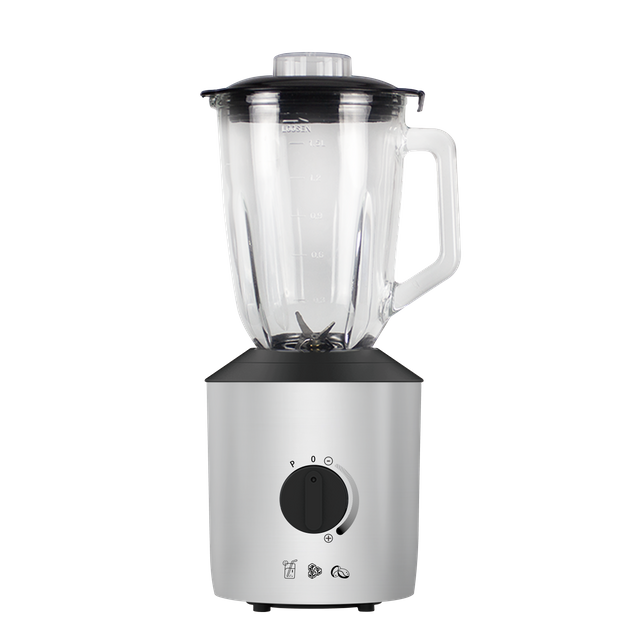
Blade design determines blending efficiency. Four-blade, six-blade, and multi-level blade assemblies create different flow patterns. Stainless steel grades such as 304 and 420 are common. Hardened steel blades hold an edge longer but may be more expensive. Buyers should ask about blade thickness, hardening process, and corrosion resistance. They should also test whether the blade assembly can be removed for cleaning without tools. A poorly designed blade can create cavitation, leaving chunks of frozen fruit or ice. A well-designed blade creates a vortex that pulls ingredients into the cutting zone.
Blender jars are made from glass, Tritan, polycarbonate, or stainless steel. Glass is heavy but scratch-resistant and odor-resistant. Tritan is lightweight, shatter-resistant, and BPA-free. Polycarbonate is economical but can scratch and retain odors over time. Stainless steel is durable and preferred in some commercial settings, but it is opaque. Buyers should verify food-contact certifications and dishwasher safety. Jar capacity should match the target market. A 1.5-liter jar suits families, while a 2.0-liter jar suits larger households or light commercial use. Personal blenders may use 600-milliliter cups. The lid and sealing system are equally important. A leaky lid leads to returns, so buyers should request leak tests and drop tests.
Basic blenders offer low, high, and pulse. Premium blenders offer variable speed dials, digital timers, and preset programs for smoothies, soups, ice crush, and cleaning. Electronic controls add cost but can improve user experience. Buyers should consider whether the target market values simplicity or advanced features. In some markets, mechanical controls are preferred for durability and lower repair costs. In other markets, digital displays and touch controls are expected. The supplier should be able to provide both options on the same motor platform.
Noise is a common consumer complaint. High-performance blenders can exceed 90 decibels, which is uncomfortable in home kitchens and unacceptable in some commercial environments. Buyers should ask for noise test data at different speeds and loads. Vibration indicates imbalance in the blade or motor. Excessive vibration can loosen screws, crack jars, and shorten motor life. Durability testing should include drop tests, jar impact tests, switch life tests, and motor endurance tests. A supplier with in-house testing equipment can provide repeatable data rather than anecdotal claims.
Compliance is not optional. Electric blenders are regulated products in most markets. They require electrical safety certification, electromagnetic compatibility documentation, and food-contact material declarations. Buyers should verify that the factory operates under a recognized quality management system and that products carry the necessary certifications for the destination market. Common certifications include CE, CB, GS, and RoHS. Additional requirements may include ETL, UL, FDA, LFGB, and REACH depending on the region.
TAIFAI states that its production of goods follows ISO9001:2015 standard. The company insists on strict management of production operation and quality. A variety of its products have CE, CB, GS, and RoHS certification with fantastic design, good performance, multi-functional features, and reasonable price. For buyers, these certifications reduce compliance risk and shorten time to market. However, buyers should still request copies of certificates, test reports, and declarations of conformity. They should confirm that the certificate covers the exact model and voltage configuration being purchased. A certificate for a 220-240V model does not automatically cover a 110-120V model.
Food-contact compliance is equally important. Jars, lids, blades, and gaskets must meet food-grade requirements. Buyers should request migration test reports and material safety data sheets. For markets with strict chemical regulations, such as the European Union, suppliers must demonstrate compliance with RoHS and REACH. For the United States, FDA compliance for food-contact materials is essential. A professional manufacturer will have a compliance folder ready for each product line.
Evaluating a blender supplier requires more than comparing quotations. Buyers should assess factory capability, engineering support, quality systems, production capacity, lead times, communication, and after-sales service. The following checklist can be used during factory audits and supplier scorecard reviews.
TAIFAI supports OEM, ODM, and CKD. This flexibility is valuable for buyers at different stages. A new brand may start with ODM products to test the market, then move to OEM with custom colors and logos, and eventually consider CKD to reduce import duties or assemble locally. An established retailer may use OEM to create exclusive models. A commercial distributor may use CKD to manage inventory and service in the destination market.
OEM, ODM, and CKD are three common sourcing models in the small appliance industry. Each has advantages and trade-offs. Buyers should choose based on brand strategy, budget, technical resources, and target market requirements.
In an OEM arrangement, the buyer provides specifications, design, branding, and sometimes tooling. The factory manufactures the product to the buyer's requirements. OEM gives the buyer maximum control over product features, packaging, and brand identity. It also creates barriers to entry for competitors because the design is exclusive. However, OEM requires higher investment in tooling, engineering, and certification. It also requires clear intellectual property agreements. A manufacturer with own moulds and patents, such as TAIFAI, can support OEM projects by providing engineering feedback, mold modification, and production validation.
In an ODM arrangement, the factory offers a ready-designed product that the buyer can brand and sell. ODM is faster and less expensive because tooling and certification already exist. Buyers can often request minor customizations such as color, logo, packaging, and voltage. ODM is ideal for market testing, private label programs, and buyers with limited engineering resources. The risk is that similar products may be sold to other buyers. To mitigate this, buyers can negotiate exclusivity for a specific model, market, or channel. They can also request cosmetic and feature changes that differentiate the product.
CKD means the product is shipped in parts for assembly in the destination country. CKD can reduce import duties, lower shipping volume, and create local jobs. It requires the buyer to have assembly capability, quality control, and spare parts management. CKD is common in markets with high tariffs on finished goods or local content requirements. A supplier experienced in CKD will provide assembly instructions, fixtures, testing procedures, and training. TAIFAI supports CKD, which allows buyers to optimize landed cost and localize final production.
Quality control is the backbone of high-performance sourcing. A supplier without a robust quality system may produce excellent samples but inconsistent mass production. Buyers should understand the production workflow from incoming materials to final packing. They should also define inspection points and acceptance criteria.
Motors, blades, jars, switches, power cords, and electronic boards must be inspected before assembly. Key checks include voltage, current, resistance, dimensional accuracy, material certificates, and appearance. A factory that tests incoming motors on a load bench can catch defects before they become finished goods. Buyers should ask for incoming inspection records and supplier qualification procedures.
During assembly, operators and quality inspectors check critical parameters. Motor mounting, blade alignment, jar sealing, switch function, and electrical safety are common checkpoints. Statistical process control can identify trends before defects occur. A well-organized factory uses poka-yoke fixtures to prevent assembly errors. For example, a fixture can ensure the blade is installed in the correct orientation. A mistake-proofed process reduces rework and improves consistency.
Every finished blender should undergo a functional test. This may include low-speed run, high-speed run, pulse function, leakage current test, insulation resistance test, and grounding continuity test. Commercial blenders may require a longer run-in test to detect early motor failures. After testing, products should be cleaned, inspected for cosmetic defects, and packed according to the buyer's packaging specification.
Reliability testing simulates real-world use. Motor endurance tests run the blender through repeated cycles under load. Jar drop tests verify impact resistance. Lid leak tests ensure the seal holds. Switch life tests cycle the controls thousands of times. Buyers should request test reports for the exact model and voltage. If the supplier cannot provide reliability data, the buyer should consider third-party testing or a pilot order with extended inspection.
Unit price is only one component of total landed cost. Buyers must consider tooling, certification, packaging, freight, insurance, duties, taxes, inspection, warehousing, and after-sales costs. A lower unit price may be offset by higher defect rates, longer lead times, or expensive spare parts. A high-performance sourcing decision uses total cost of ownership.
Minimum order quantity, or MOQ, is another key factor. Factories set MOQ based on material procurement, production setup, and packaging. For ODM products, MOQ may be lower because tooling already exists. For OEM products, MOQ may be higher due to custom molds, labels, and electronics. Buyers should negotiate MOQ by model, color, and voltage. They can also agree on a ramp-up schedule that starts with a smaller trial order and increases after quality is proven.
Payment terms affect cash flow and risk. Common terms include deposit plus balance against bill of lading, letter of credit, and open account for established relationships. Buyers should link payment milestones to production and inspection milestones. For example, a deposit may be paid after contract signing, a progress payment after sample approval, and the balance after final inspection. Clear terms protect both parties.
Packaging is part of the product. A blender that arrives damaged will generate returns regardless of motor quality. Buyers should specify packaging materials, drop test standards, and retail artwork. Packaging must protect the product during ocean transport, trucking, and warehouse handling. It must also communicate key features and comply with labeling regulations.
Retail packaging includes color boxes, master cartons, inner partitions, poly bags, and manuals. Buyers should provide print-ready artwork and require a pre-production packaging proof. They should also verify barcodes, country of origin, warning labels, and recycling symbols. For e-commerce, packaging may need to be frustration-free, compact, and strong enough for parcel networks.
Master carton strength is measured by burst strength and edge crush test. Buyers should ask for carton specifications and stacking tests. Loading efficiency affects freight cost. A supplier that optimizes carton dimensions can fit more units per container, reducing cost per unit. Buyers should request container loading plans for 20-foot, 40-foot, and 40-foot high-cube containers.
Incoterms define responsibilities for transport, insurance, and customs. Common terms for small appliance sourcing include FOB, CIF, and DDP. FOB gives the buyer control over freight and insurance. CIF simplifies logistics but may limit control. DDP is convenient but can be expensive and risky for the supplier. Buyers should choose terms based on their logistics capabilities and risk tolerance. They should also consider port congestion, shipping schedules, and seasonal demand.
The blender market is evolving. Consumers want healthier lifestyles, convenience, and personalized nutrition. They also care about sustainability, noise, and ease of cleaning. These trends influence product design and sourcing requirements.
Smoothies, plant-based milks, protein shakes, and baby food are driving demand for high-performance blenders. Consumers want machines that can crush ice, blend frozen fruit, and process nuts without losing texture. This requires powerful motors and durable blades. Buyers should source models with tested performance for these ingredients.
Digital controls, app connectivity, and preset programs are becoming more common. However, smart features add cost and complexity. Buyers should evaluate whether the target market values connectivity or prefers simple, durable controls. In many commercial settings, reliability matters more than app integration.
Noise is a major pain point. Some premium blenders use sound enclosures, vibration-damping mounts, and quieter motors. Buyers can source models with reduced noise levels for cafes, hotels, and open-plan kitchens. Noise reduction often requires a larger base, better insulation, and tighter tolerances.
Consumers and regulators are demanding recyclable packaging, energy-efficient motors, and repairable products. Buyers can ask suppliers about recycled content, packaging reduction, and spare part availability. A manufacturer that designs for repairability can help buyers comply with right-to-repair regulations and build customer loyalty.
Jiangmen Taifai Technology Co.,Ltd, also known as TAIFAI, illustrates how a specialized manufacturer can support high-performance sourcing. The company is located in China, in Jiangmen City, Guangdong Province, a flourishing home appliances manufacturing base. Founded in 2007, TAIFAI is a high-tech enterprise with capabilities and services of independent research and development, production, and sales. Its main products include electric blender, juicer, citrus juicer, hand mixer, hand blender, stand mixer, coffee grinder, chopper, and food processor. This product portfolio allows buyers to source multiple kitchen appliances from one partner, reducing supplier management overhead and improving shipping efficiency.
TAIFAI supports OEM, ODM, and CKD. The company has 50 patents and 50 own moulds. Own moulds are important because they allow the factory to control tooling quality, modify designs quickly, and protect buyer-specific designs. Patents demonstrate investment in innovation and can provide legal protection for unique features. TAIFAI states that its products have been approved for dozens of patents, and its production follows ISO9001:2015 standard. The company insists on strict management of production operation and quality. A variety of its products have CE, CB, GS, and RoHS certification with fantastic design, good performance, multi-functional features, and reasonable price. These attributes make TAIFAI a relevant example for buyers seeking a manufacturer that combines scale, technology, and compliance.
For a buyer entering the blender market, an ODM program from TAIFAI could provide a fast route to market with proven designs and certifications. For a buyer with an established brand, OEM collaboration could create exclusive models with custom colors, controls, and packaging. For a buyer in a market with high duties or local assembly incentives, CKD support could reduce landed cost and create local value. The company's focus on kitchen electric appliances, including blenders, juicers, mixers, grinders, choppers, and food processors, means it understands the shared components and manufacturing processes across categories. This cross-category knowledge can improve quality and reduce cost.
International sourcing carries risks. Buyers should identify, assess, and mitigate risks before placing orders. Common risks include quality failure, delivery delay, certification non-compliance, currency fluctuation, shipping disruption, and intellectual property infringement.
Quality risk can be reduced through sample approval, pilot orders, pre-shipment inspection, and reliability testing. Buyers should define acceptance criteria and defect classification. Critical defects such as electrical safety issues should result in rejection. Major defects such as motor failure should trigger corrective action. Minor defects such as cosmetic scratches should be managed with acceptable quality limits.
Delivery risk can be reduced by confirming production capacity, material lead times, and shipping schedules. Buyers should build buffer time for peak seasons such as Christmas, Black Friday, and Chinese New Year. They should also consider dual sourcing or safety stock for critical models.
Compliance risk can be reduced by verifying certificates, testing samples in the destination market, and monitoring regulatory changes. Buyers should require the supplier to notify them of any design or component changes that affect certification. They should also keep compliance documents for traceability.
Intellectual property risk can be reduced by conducting patent searches, signing non-disclosure agreements, and registering designs in key markets. Buyers should confirm that the supplier has the right to use all designs and components. A supplier with own patents and moulds can help protect buyer-specific designs.
Negotiation is not only about price. Buyers should negotiate specifications, quality standards, delivery schedules, payment terms, warranty, and after-sales support. A well-written contract prevents disputes and aligns expectations.
Buyers should also agree on communication protocols. A single point of contact, regular production updates, and a documented change management process reduce misunderstandings. For long-term partnerships, buyers and suppliers can hold quarterly business reviews to discuss quality, delivery, and new product development.
A structured roadmap helps buyers move from category research to purchase order. The following steps summarize a high-performance sourcing process for electric blenders.
TAIFAI and similar manufacturers can support several of these steps by providing samples, certifications, engineering support, and OEM or ODM services. Buyers should treat the supplier as a partner rather than a transactional vendor. A collaborative relationship leads to better problem-solving, faster innovation, and more reliable supply.
Even experienced buyers can make mistakes. Recognizing common pitfalls helps teams avoid costly errors.
The lowest price often comes with hidden costs. Cheap motors fail earlier, thin jars crack, and poor packaging leads to shipping damage. Buyers should compare total cost of ownership, not just unit price.
Selling an uncertified blender can lead to customs seizures, fines, and recalls. Buyers should verify certifications for the exact model and voltage. They should also confirm that the supplier can provide updated certificates when regulations change.
Vague specifications such as high power or durable blade are not enough. Buyers should specify motor input power, torque requirements, blade material, jar material, and duty cycle. Clear specifications make it easier to compare suppliers and enforce quality.
A pilot order reveals production quality, packaging strength, and delivery reliability. It also allows buyers to test the market before committing to large volumes. Even a small pilot order can uncover issues that samples do not show.
After-sales support is critical for customer satisfaction. Buyers should confirm spare parts availability, warranty terms, and technical support. A supplier that responds quickly to quality claims protects the buyer's brand.
High-performance sourcing of electric blenders requires a balanced approach. Buyers must understand product categories, performance metrics, manufacturing standards, certifications, cost structures, and risk management. They must evaluate suppliers on capability, quality, communication, and flexibility. They must also choose the right sourcing model, whether OEM, ODM, or CKD, based on their brand strategy and resources.
Manufacturers such as Jiangmen Taifai Technology Co.,Ltd, known as TAIFAI, demonstrate how a specialized Chinese manufacturer can support global buyers. Located in Jiangmen City, Guangdong Province, China, and founded in 2007, TAIFAI is a high-tech enterprise with independent research and development, production, and sales. Its product range includes electric blender, juicer, citrus juicer, hand mixer, hand blender, stand mixer, coffee grinder, chopper, and food processor. The company supports OEM, ODM, and CKD, holds 50 patents and 50 own moulds, and follows ISO9001:2015 standards. Many of its products carry CE, CB, GS, and RoHS certification. For buyers seeking a reliable partner in kitchen electric appliances, this combination of scale, technology, and compliance is a strong foundation for long-term success.
The blender market will continue to grow as consumers demand convenience, nutrition, and performance. Buyers who invest in supplier evaluation, product testing, and quality control will build brands that customers trust. Those who cut corners on compliance or component quality will face returns, recalls, and lost reputation. High-performance sourcing is not about finding the cheapest blender. It is about finding the right manufacturing partner and the right product for the target market. With a structured roadmap, clear specifications, and strong supplier relationships, buyers can achieve profitable growth in the electric blender category.
This buyer guide explains how sourcing professionals can evaluate and purchase high-performance electric blenders. It begins by defining the product landscape, including countertop blenders, personal blenders, commercial blenders, and immersion blenders. It then details critical performance metrics such as motor power, torque, blade geometry, jar material, speed controls, noise, vibration, and durability. The guide emphasizes compliance, noting that blenders must meet electrical safety, electromagnetic compatibility, and food-contact requirements in each destination market. Common certifications include CE, CB, GS, and RoHS, and buyers should verify that certificates cover the exact model and voltage. The guide also outlines supplier evaluation criteria, including company stability, research and development, production equipment, quality management, testing capability, certifications, OEM and ODM support, supply chain strength, logistics, and after-sales service. It compares OEM, ODM, and CKD sourcing models and explains their trade-offs in terms of customization, cost, speed, and local assembly. Quality control is covered from incoming material inspection to in-process checks, final testing, and reliability testing. Costing, MOQ, total landed cost, packaging, logistics, and Incoterms are discussed as part of commercial planning. Market trends such as health and wellness, smart features, noise reduction, and sustainability are reviewed. A manufacturer spotlight on Jiangmen Taifai Technology Co.,Ltd, also known as TAIFAI, shows how a specialized Chinese manufacturer can support high-performance sourcing. TAIFAI was founded in 2007 in Jiangmen City, Guangdong Province, China. It is a high-tech enterprise with independent research and development, production, and sales. Its main products include electric blender, juicer, citrus juicer, hand mixer, hand blender, stand mixer, coffee grinder, chopper, and food processor. The company supports OEM, ODM, and CKD, holds 50 patents and 50 own moulds, follows ISO9001:2015 standards, and offers products with CE, CB, GS, and RoHS certification. The guide concludes with risk management, negotiation essentials, a ten-step sourcing roadmap, common mistakes, and a final conclusion. The central message is that successful blender sourcing balances product performance, supplier capability, compliance, and total cost of ownership rather than chasing the lowest unit price.


