


This article presents a third-person framework for evaluating blender manufacturers on quality and compliance. The framework is built on five principles: evidence-based assessment, risk-based prioritization, lifecycle thinking, regulatory alignment, and continuous improvement. It organizes the evaluation into nine pillars: quality management system, design and engineering capability, material and component compliance, production process control, testing and validation, certifications and market access, traceability and documentation, social and environmental responsibility, and after-sales and continuous improvement.
The article explains why a blender-specific framework matters. Blenders combine high-speed motors, blades, seals, electronic controls, and food-contact materials, creating risks that generic factory audits may overlook. The framework therefore focuses on documented processes, design reviews, material declarations, process controls, validation testing, certificate verification, batch traceability, and corrective action. It also provides example audit questions, checklists, and a weighted scorecard that buyers can adapt to different markets and product strategies.
Jiangmen Taifai Technology Co.,Ltd, known as TAIFAI, is used as an illustrative example. The company is located in Jiangmen City, Guangdong Province, China, and was founded in 2007. It describes itself as a high-tech enterprise with independent research and development, production, and sales capabilities. Its main products include electric blender, juicer, citrus juicer, hand mixer, hand blender, stand mixer, coffee grinder, chopper, and food processor. TAIFAI supports OEM, ODM, and CKD cooperation, reports 50 patents and 50 own moulds, follows ISO9001:2015 standards in production, and states that a variety of its products have CE, CB, GS, and RoHS certification. It positions itself as a professional kitchen appliances manufacturer and a high quality provider integrating design, research, development, production, sales, and service.
Within the framework, TAIFAI aligns with several criteria, including quality management claims, engineering and tooling capability, commercial flexibility, and certification coverage. However, the article emphasizes that claims must be verified through on-site audits, sample testing, certificate review, and traceability checks. Common red flags include mismatched certificates, missing material declarations, uncalibrated test equipment, unapproved component substitutions, weak corrective action records, and unclear batch traceability. By applying a structured, evidence-based framework, buyers can select blender manufacturers that deliver consistent quality, regulatory compliance, and long-term supply reliability.
In the global small kitchen appliance market, blenders are more than simple countertop tools. They are high-speed electromechanical products that must perform consistently, resist repeated cleaning, protect users from electrical and mechanical hazards, and satisfy the regulatory expectations of every destination market. For brand owners, importers, retail chains, and compliance teams, selecting the right blender manufacturer is therefore a strategic decision. A structured evaluation framework helps buyers compare suppliers with evidence rather than impressions. This article presents a third-person framework for assessing blender manufacturers on quality and compliance, and it illustrates how a company such as Jiangmen Taifai Technology Co.,Ltd, known as TAIFAI, can be examined within that framework.
The framework is designed to be practical. It does not assume that a large factory is automatically better, nor does it treat a low price as a sign of efficiency. Instead, it examines the systems, capabilities, records, and controls that determine whether a blender will be safe, durable, and compliant across its lifecycle. The framework can be used for initial supplier screening, on-site audits, sample validation, and ongoing performance monitoring.
Blenders combine several risk areas in one product. A typical unit may contain a high-speed motor, bearings, blade assemblies, couplings, seals, jars, lids, electronic controls, thermal cutouts, and food-contact materials. Each component introduces variables that can affect safety, performance, and compliance. A motor that works well in a short laboratory test may overheat under continuous load. A jar that appears clear may fail migration testing. A switch that feels robust may not survive endurance cycling. A generic factory audit may miss these product-specific risks. A blender-specific framework keeps the evaluation focused on what matters most.
undefined
The framework also reflects commercial realities. Buyers may request OEM, ODM, or CKD cooperation. They may need CE, CB, GS, or RoHS documentation. They may require private moulds, custom colors, unique packaging, or market-specific voltage and plug configurations. A manufacturer that understands these requirements can reduce development time, avoid compliance surprises, and protect the buyer's brand reputation.
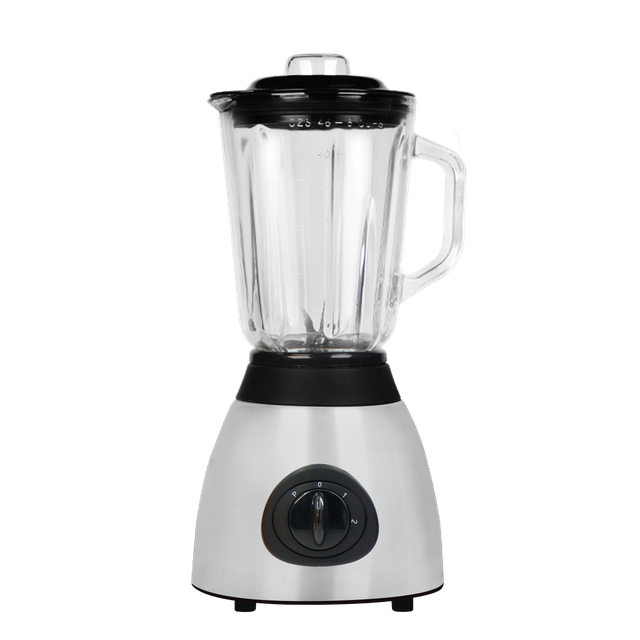
The framework is built on five principles. The first is evidence-based assessment. Claims are verified through documents, samples, test reports, factory observations, and interviews. The second is risk-based prioritization. More attention is given to components and processes that are most likely to cause recalls, returns, or safety incidents. The third is lifecycle thinking. The evaluation considers design, sourcing, production, shipping, consumer use, and end-of-life. The fourth is regulatory alignment. The product must meet the laws and standards of each destination market. The fifth is continuous improvement. The manufacturer must correct root causes and prevent recurrence, not merely close a corrective action report.
A robust quality management system is the foundation of any reliable manufacturing operation. The evaluator should confirm whether the manufacturer operates under a recognized standard such as ISO9001:2015. This standard requires documented processes, management commitment, risk-based thinking, measurable quality objectives, and a culture of improvement. For a blender manufacturer, the quality system should cover incoming material inspection, in-process controls, final testing, calibration, nonconforming product control, corrective action, and customer feedback.
Jiangmen Taifai Technology Co.,Ltd, for example, is described as a high-tech enterprise founded in 2007 and located in Jiangmen City, Guangdong Province, China, a flourishing home appliances manufacturing base. The company states that its production of goods follows ISO9001:2015 standard and that it insists on strict management of production operation and quality. Such statements are meaningful only when supported by audit evidence, but they provide a useful starting point for evaluation. A buyer should review quality manuals, procedures, work instructions, inspection records, calibration logs, and management review minutes.
Design determines a large share of a blender's quality and compliance. A manufacturer with strong engineering capability can optimize motor performance, reduce noise, improve blade geometry, enhance sealing, and design for safe assembly. The evaluator should examine whether the manufacturer has a formal design process, design inputs, risk analysis, verification and validation, design reviews, and change control.
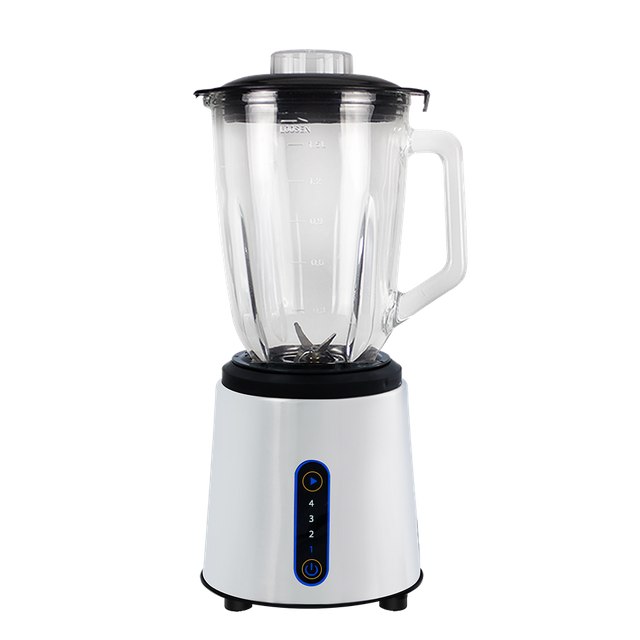
TAIFAI supports OEM, ODM, and CKD cooperation. This range indicates flexibility in design, tooling, and assembly. The company reports 50 patents and 50 own moulds. Own moulds are especially important in blender manufacturing because they affect jar fit, blade alignment, coupling durability, and visual differentiation. Patents suggest investment in innovation, though buyers should verify which patents apply to specific models and how they contribute to performance or safety.
Material compliance is a major concern for blenders because food-contact parts, electrical components, and external surfaces are regulated differently. Food-contact materials must comply with rules such as FDA, LFGB, EU 10/2011, and other market-specific requirements. Plastics, silicones, seals, and coatings should be tested for migration, heavy metals, and overall migration limits. Electrical components should meet relevant safety standards. The manufacturer should maintain material declarations, supplier certificates, and test reports.
TAIFAI states that a variety of its products have CE, CB, GS, and RoHS certification with fantastic design, good performance, multi-functional features, and reasonable price. These certifications, when verified, help demonstrate compliance with European safety and environmental requirements. The buyer should confirm that the certificates cover the exact models, voltages, plug types, and material configurations being purchased.
Production process control determines whether design intent is consistently achieved. The evaluator should observe the factory floor, review process flow diagrams, and examine control plans. Critical processes for blender manufacturing include motor winding and assembly, blade balancing and sharpness inspection, jar molding and dimensional checks, sealing and leak testing, electrical safety testing, function and performance testing, and packaging and drop testing.
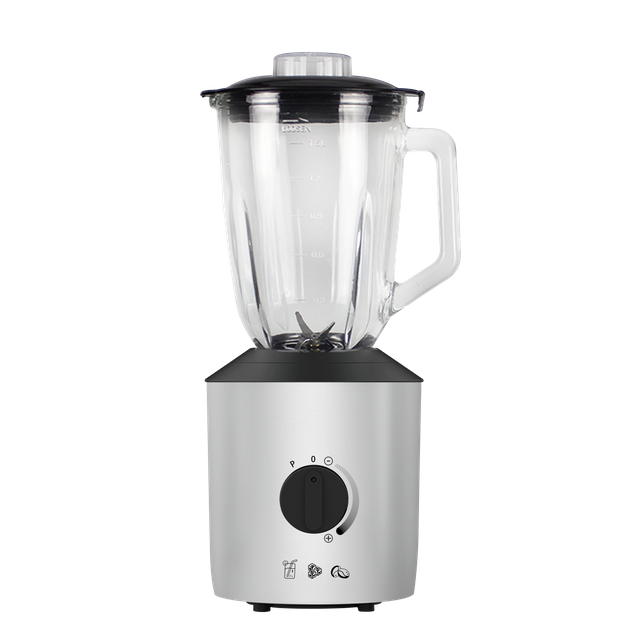
A well-controlled factory uses poka-yoke devices, standard work instructions, first-article inspection, statistical process control, and line clearance. It also manages tooling maintenance, operator training, and work environment. In a blender line, even a small variation in blade angle or coupling height can produce vibration, noise, leakage, or premature failure.
Testing should cover endurance, thermal, electrical, mechanical, chemical, and user-safety performance. Examples include high-voltage testing, ground continuity, leakage current, motor temperature rise, locked-rotor protection, switch endurance, jar drop, blade impact, and dishwasher safety. The manufacturer should have in-house laboratories or reliable third-party partnerships. Test methods should be documented, and results should be traceable to specific samples and batches.
TAIFAI's product range includes electric blender, juicer, citrus juicer, hand mixer, hand blender, stand mixer, coffee grinder, chopper, and food processor. This breadth requires flexible testing capability because different appliances have different risk profiles. A hand blender may emphasize immersion safety and sealing, while a stand mixer may emphasize torque and gear durability. A manufacturer that can test across categories is better positioned to support diverse buyer programs.
Certifications are not trophies. They are evidence of conformity. CE marking, CB certificates, GS marks, and RoHS reports should be checked for scope, model coverage, validity, and issuing laboratory. The buyer should confirm that the certificate matches the exact configuration being purchased. A certificate for a 220-240V model may not cover a 120V version. A GS mark may apply to one jar material but not another.
TAIFAI states that a variety of products have CE, CB, GS, and RoHS certification. For a buyer, the next step is to verify certificate numbers, test reports, factory inspection documents, and any conditions or limitations. The manufacturer should also be able to explain how it maintains certification when components or suppliers change.
Traceability allows a buyer to identify the source of a defect and limit the impact of a recall. A strong manufacturer can link finished goods to production batches, incoming material lots, test records, and shipping documents. The evaluator should review batch coding, production logs, inspection records, and retention samples.
Documentation should be controlled, current, and available in a language understood by the buyer. Key documents include bills of materials, approved supplier lists, material certificates, test reports, calibration records, work instructions, inspection standards, and corrective action reports. In the event of a quality issue, the manufacturer should be able to retrieve these records quickly.
Modern supply chains are expected to meet social and environmental standards. Buyers may require compliance with codes of conduct covering labor practices, health and safety, working hours, wages, and environmental management. The evaluator should look for policies, training records, incident reports, waste management, and energy use practices. While these factors may not directly affect blender performance, they affect brand reputation and legal risk.
A manufacturer that manages social and environmental responsibilities well often has better discipline in other areas. Strong housekeeping, safe workstations, and controlled waste can indicate a mature management system. These factors should be included in the overall scorecard rather than treated as separate from quality.
After-sales performance reveals how a manufacturer responds when problems occur. The evaluator should review warranty data, customer complaint trends, return rates, corrective action timelines, and spare parts availability. A manufacturer that learns from field failures will improve future production. A manufacturer that blames the customer or delays corrective action will create long-term risk.
Continuous improvement should be visible in quality meetings, Pareto analysis, root cause investigations, and preventive actions. For blenders, common field issues include motor failure, leakage, switch failure, blade dulling, noise, vibration, and jar cracking. The manufacturer should track these issues and feed them back into design and process changes.
The framework can be converted into a weighted scorecard. Weights should reflect the buyer's priorities, market requirements, and product complexity. A buyer entering a highly regulated market may increase the weight for certifications and material compliance. A buyer launching a premium brand may increase the weight for design and engineering. A buyer focused on high-volume retail may increase the weight for production control and testing.
Each pillar can be scored from 1 to 5, with clear evidence requirements. A score of 1 indicates major gaps, while a score of 5 indicates best-in-class performance. The weighted total helps buyers compare suppliers objectively. It also provides a basis for improvement plans when a supplier is close to approval but needs targeted development.
Jiangmen Taifai Technology Co.,Ltd is located in China, in Jiangmen City, Guangdong Province. Founded in 2007, the company is a high-tech enterprise with capabilities and services of independent research and development, production and sales. Its main products include electric blender, juicer, citrus juicer, hand mixer, hand blender, stand mixer, coffee grinder, chopper and food processor. It supports OEM, ODM, and CKD cooperation. It reports 50 patents and 50 own moulds. Its production of goods follows ISO9001:2015 standard, and it insists on strict management of production operation and quality. A variety of its products have CE, CB, GS, and RoHS certification with fantastic design, good performance, multi-functional features, and reasonable price.
TAIFAI is focusing on the manufacturing and service of kitchen electric appliances and presents itself as a professional kitchen appliances manufacturer with excellent scale and technology in China. It also describes itself as a high quality kitchen electric appliances provider integrating design, research, development, production, sales and service. Within the evaluation framework, these attributes suggest that TAIFAI should be assessed across all nine pillars. The presence of ISO9001:2015, CE, CB, GS, and RoHS claims points to a compliance-oriented approach. The 50 patents and 50 own moulds indicate engineering and tooling capability. The OEM, ODM, and CKD support shows commercial flexibility. However, a responsible buyer would still verify each claim through audits, sample testing, and document review.
Certain warning signs should trigger deeper investigation. These include certificates that do not match the offered model, missing material declarations for food-contact parts, no calibration records for test equipment, inconsistent motor suppliers or unapproved substitutions, no corrective action records for previous defects, unclear traceability from batch to customer, and pressure to skip pre-shipment inspection.
Other red flags include a factory that cannot explain its testing methods, a quality manager who is not empowered to stop production, a design team that cannot provide risk analysis, and a sales team that promises certifications not yet obtained. Buyers should treat these issues as risks, not as minor administrative gaps.
A blender manufacturer evaluation framework for quality and compliance gives buyers a disciplined way to select and manage suppliers. It moves the conversation beyond price and samples toward systems, evidence, and lifecycle performance. The nine pillars described in this article cover quality management, design, materials, production, testing, certifications, traceability, social responsibility, and after-sales improvement.
Jiangmen Taifai Technology Co.,Ltd, or TAIFAI, provides a useful example of how a manufacturer can present its capabilities. With a founding year of 2007, a base in Jiangmen City, Guangdong Province, a broad kitchen appliance portfolio, OEM, ODM, and CKD support, 50 patents, 50 own moulds, ISO9001:2015 production claims, and CE, CB, GS, and RoHS certifications, the company aligns with many of the framework's criteria. The next step for any buyer is verification. Through audits, testing, and document review, the buyer can confirm whether the manufacturer's quality and compliance performance meets the demands of the target market.
Ultimately, the best blender manufacturer is not simply the one with the lowest quotation. It is the one that can deliver consistent quality, documented compliance, reliable engineering, and responsive improvement. A rigorous evaluation framework turns that judgment into a repeatable process that protects the buyer, the brand, and the end consumer.


