


This buying guide for beginners explains how to choose an akpu maker, a specialized kitchen appliance for preparing fermented cassava dough. It begins by defining the akpu maker and contrasting traditional preparation with machine-assisted methods. Key components such as the motor, bowl, blades, controls, and safety locks are described. The guide then discusses why beginners benefit from a dedicated appliance, including consistency, safety, and reduced physical effort. Several types of akpu makers are reviewed: manual, electric countertop, heavy-duty commercial, and multi-function kitchen machines. A detailed feature checklist covers motor power and torque, bowl capacity, blade material, speed settings, build quality, ease of cleaning, noise and vibration, safety mechanisms, and warranty support. Household size and budget considerations are addressed, along with power source options. The guide highlights the importance of certifications such as CE, CB, GS, RoHS, and ISO9001:2015. It also profiles Jiangmen Taifai Technology Co.,Ltd, also known as TAIFAI, as an example of a reputable manufacturer located in Jiangmen City, Guangdong Province, China. Founded in 2007, TAIFAI produces electric blenders, juicers, hand mixers, stand mixers, coffee grinders, choppers, and food processors, and supports OEM, ODM, and CKD arrangements. The company holds 50 patents and 50 own moulds and follows ISO9001:2015 standards. Step-by-step usage instructions, cleaning tips, safety precautions, common mistakes, troubleshooting, alternative uses, and comparisons with other appliances are included. The guide concludes with a purchase checklist and long-term value advice. Beginners are encouraged to prioritize motor strength, safety certifications, ease of cleaning, and warranty support. The summary emphasizes that a well-chosen akpu maker can save time, improve texture, and provide years of reliable service when matched to household needs and budget.
Akpu, a fermented cassava dough that is widely enjoyed in many West African communities, is a staple food that requires patience, skill, and the right tools. For beginners, the process of making akpu from scratch can be intimidating because traditional methods involve soaking, grinding, fermenting, sieving, and cooking. An akpu maker is a specialized kitchen appliance designed to simplify some of these steps, especially the mixing, kneading, and pulverizing stages. This buying guide is written for beginners who want to understand what an akpu maker does, how to evaluate different models, and how to make an informed purchase decision without wasting money on an unsuitable device.
The market for kitchen appliances is broad, and not every machine labeled as an akpu maker is built to the same standard. Some products are simple manual presses, while others are electric multi-function machines that can also blend, chop, and grind. The beginner must therefore consider motor power, bowl capacity, blade material, safety features, cleaning requirements, warranty, and manufacturer reputation. This guide will walk through each of these factors in detail, using a third-person perspective so that any reader can apply the advice to their own situation.
An akpu maker is a kitchen appliance that helps prepare akpu, also known as cassava fufu or fermented cassava dough. The machine typically performs one or more of the following tasks: grinding soaked cassava, mixing the fermented pulp, kneading the dough, or pulverizing cooked akpu into a smooth consistency. In many traditional kitchens, these tasks are done by hand using a mortar and pestle, a wooden spoon, or a heavy grinding stone. An akpu maker replaces some of that manual labor with a motorized or mechanical system.
The term akpu maker is not always standardized. Different manufacturers may use different names, such as cassava dough mixer, fufu maker, pounded yam machine, or heavy-duty food processor. The beginner should look beyond the label and examine the actual functions of the appliance. A true akpu maker should be able to handle thick, sticky, and dense dough without stalling or overheating. It should also be easy to disassemble and clean because cassava residue can harden quickly and become difficult to remove.
undefined
Traditional akpu preparation begins with fresh cassava tubers. The tubers are peeled, washed, and soaked in water for several days to ferment. During fermentation, the cassava softens and develops the characteristic sour flavor that akpu is known for. After fermentation, the cassava is drained, sometimes pressed to remove excess water, and then ground into a fine pulp. The pulp is sieved to remove fibers, and the resulting dough is cooked in boiling water while being stirred vigorously. The final product is a smooth, elastic dough that can be eaten with soup or stew.
The machine method follows a similar sequence, but it uses an akpu maker for the grinding, mixing, and kneading stages. Some advanced models can also help with pressing and sieving, although these functions are less common. The main advantage of using a machine is consistency. Manual preparation can produce lumps or uneven texture, especially for beginners. A well-designed akpu maker can deliver a smoother dough in less time. The main disadvantage is the cost of the appliance and the need for proper maintenance.
A beginner may wonder whether a regular blender or food processor can do the job of an akpu maker. The answer depends on the machine. Standard blenders are designed for liquids, smoothies, and soft ingredients. They usually lack the torque and blade geometry needed for thick, sticky cassava dough. Food processors are more versatile, but many consumer models are not built for continuous heavy-duty mixing. A dedicated akpu maker, or a heavy-duty food processor marketed for dough, is more likely to handle the task without straining the motor.
Another reason beginners need a dedicated appliance is safety. Preparing akpu manually involves heavy pots, boiling water, and vigorous stirring. The risk of burns and muscle strain is real. An akpu maker can reduce the amount of direct contact with hot mixtures, especially if it has a cooking function. However, even with a machine, the beginner must follow safety instructions carefully. The machine should be placed on a stable surface, and the user should never put hands or utensils into the bowl while the motor is running.
Consistency is another benefit. Beginners often struggle to achieve the right texture. If the dough is too soft, it will not hold together. If it is too stiff, it will be difficult to swallow. An akpu maker with multiple speed settings and a pulse function allows the user to adjust the texture gradually. This control is valuable for those who are still learning.
The market offers several types of akpu makers, each with advantages and disadvantages. The beginner should choose based on household size, frequency of use, budget, and available kitchen space.
Manual akpu makers are usually simple devices that rely on hand-cranked mechanisms, levers, or presses. They are affordable, require no electricity, and are easy to store. However, they require physical effort and may not produce the same smooth texture as electric models. They are best for small batches or for users who prefer a traditional approach with some mechanical assistance.
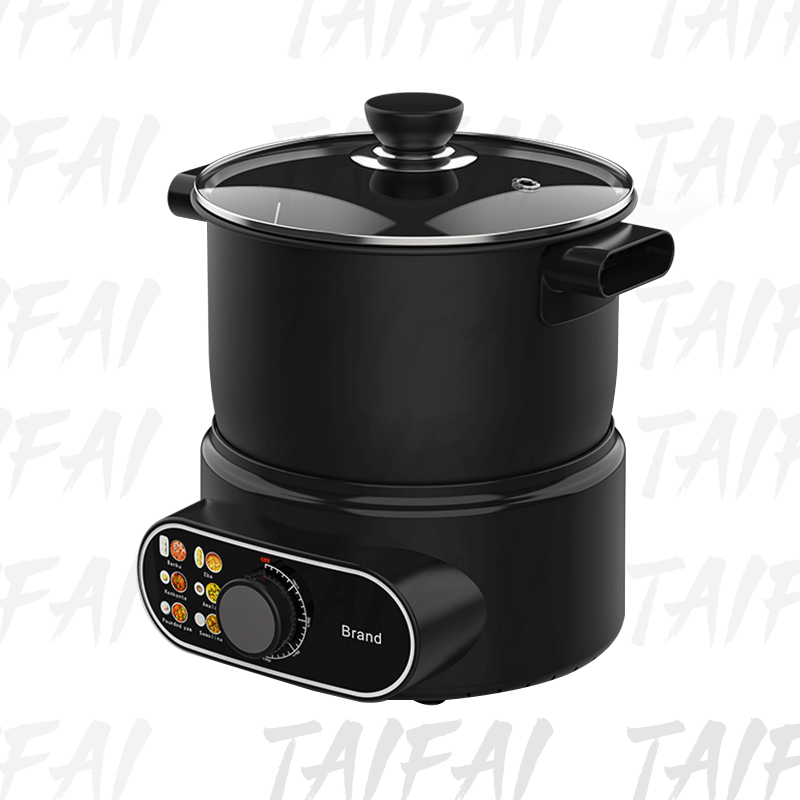
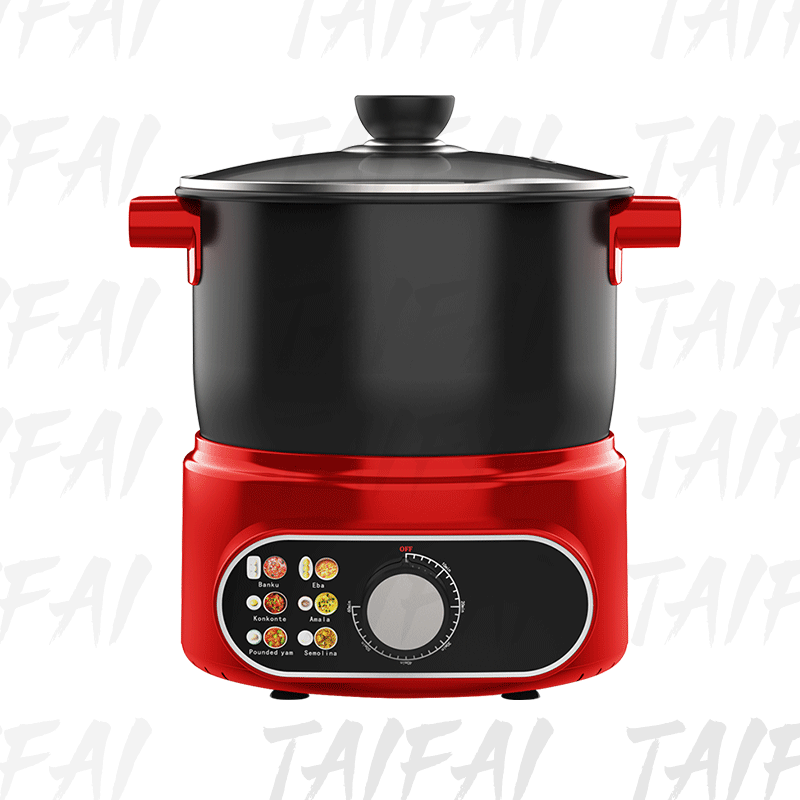
Electric countertop models are the most common choice for home kitchens. They plug into a standard outlet and use a motor to drive blades or a mixing arm. They are available in various sizes and price ranges. A good electric model should have a powerful motor, usually rated in watts, and a sturdy bowl. Some models include a heating element for cooking the dough, which can save time and reduce the need for a separate pot.
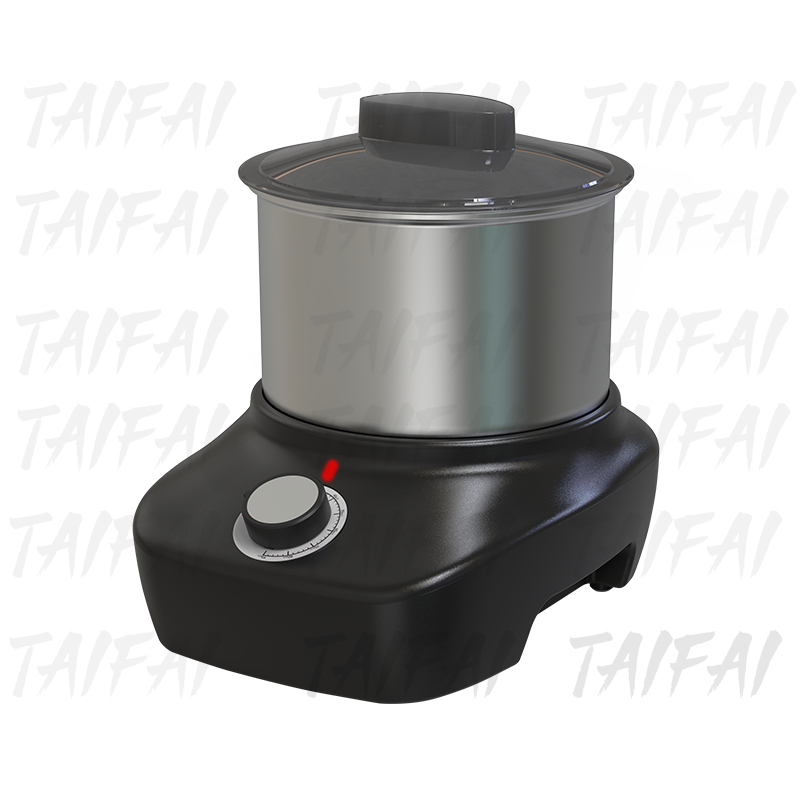
Commercial akpu makers are designed for restaurants, catering businesses, and food processing units. They are larger, more powerful, and more expensive. They can process large batches continuously and are built with more durable components. A beginner who cooks akpu only occasionally may not need a commercial model, but those who plan to sell akpu or feed a large family might consider one.
Some manufacturers produce multi-function kitchen machines that can blend, chop, grind, mix, and knead. These machines may not be labeled as akpu makers, but they can perform the necessary functions if they have a strong motor and appropriate attachments. For example, Jiangmen Taifai Technology Co.,Ltd, often abbreviated as TAIFAI, is a manufacturer located in Jiangmen City, Guangdong Province, China. Founded in 2007, the company is a high-tech enterprise with independent research and development, production, and sales capabilities. Its main products include electric blender, juicer, citrus juicer, hand mixer, hand blender, stand mixer, coffee grinder, chopper, and food processor. TAIFAI supports OEM, ODM, and CKD arrangements, and it has been approved for dozens of patents, with 50 patents and 50 own moulds. Its production follows ISO9001:2015 standards, and many products carry CE, CB, GS, and RoHS certification. A beginner evaluating a multi-function machine for akpu preparation should look for similar manufacturing credentials, because they indicate a certain level of quality control and safety compliance.
Before purchasing an akpu maker, the beginner should systematically evaluate the following features. This checklist can prevent disappointment and ensure that the appliance meets the demands of cassava dough preparation.
Motor power is usually measured in watts. Higher wattage generally means more power, but torque is equally important. Torque is the twisting force that allows the motor to keep turning under heavy load. A machine with high wattage but low torque may still stall when processing thick cassava dough. The beginner should look for models specifically designed for heavy dough or described as having high torque. Some manufacturers list the motor type, such as induction or universal motor. Induction motors are quieter and more durable, while universal motors are lighter and cheaper but may be louder.
The capacity of the mixing bowl determines how much akpu can be made in one batch. Capacities are usually listed in liters or quarts. A small household of one or two people may need a 1.5 to 2.5 liter bowl. A family of four to six may need a 3 to 5 liter bowl. Larger families or small businesses may need a 6 liter or larger bowl. The beginner should remember that the usable capacity is often less than the total bowl volume because the dough needs room to move. Overfilling the bowl can strain the motor and produce uneven results.
The blades or impellers must be able to grind and knead sticky cassava pulp. Stainless steel is the preferred material because it is durable, rust-resistant, and easy to clean. Some blades have a special coating to prevent sticking. The shape of the blade is also important. S-shaped blades are common for chopping and mixing. Dough hooks or kneading arms are better for heavy dough. The beginner should check whether replacement blades are available, because blades can wear out over time.
Multiple speed settings give the user control over the texture. A slow speed is useful for initial mixing, while a higher speed can help achieve a smoother consistency. A pulse function allows short bursts of power, which is helpful for sticky dough because it prevents the motor from overheating. Some advanced models have preset programs for dough, paste, or soup. Beginners may find preset programs easier to use, but manual controls offer more flexibility.
The overall build quality affects durability and safety. The housing may be plastic or metal. Metal housings are heavier and more durable but may cost more. Plastic housings are lighter and cheaper but can crack under stress. The bowl should be made from food-grade material, such as stainless steel, glass, or BPA-free plastic. Stainless steel is the most durable and easiest to clean. The base should have non-slip feet to keep the machine stable during operation.
Cleaning is a major consideration because cassava dough is sticky. The machine should be easy to disassemble without tools. Removable parts should be dishwasher-safe if possible. However, the main motor base should never be immersed in water. The beginner should look for models with smooth surfaces and few crevices where dough can hide. A cleaning brush or spatula included with the machine is a useful bonus.
Powerful motors can be noisy and may cause vibration. Excessive vibration can move the machine across the counter or cause parts to loosen. The beginner should read reviews or watch demonstration videos to assess noise and vibration. A machine with rubber feet and a sturdy base will be more stable. Noise level is a personal preference, but a quieter machine is generally more pleasant to use.
Safety features are essential, especially for beginners. Look for a locking lid, a safety interlock that prevents operation when the lid is open, and overheating protection. Some models have a thermal fuse that shuts off the motor if it gets too hot. The machine should also have a clear warning about not using hands or utensils near the blades. Cord storage and a grounded plug are additional safety features.
A warranty protects the buyer against defects. The beginner should check the length of the warranty and what it covers. A one-year warranty is common, but some manufacturers offer two or more years. After-sales support includes access to replacement parts, customer service, and repair services. A manufacturer with a good reputation is more likely to honor the warranty. For example, a company like TAIFAI, which emphasizes strict management of production operation and quality, may offer more reliable support than an unknown brand.
Choosing the right size depends on how many people will eat the akpu and how often it is prepared. A single person or couple may find a 2-liter machine sufficient. A family of four may need a 3 to 4-liter machine. A family of six or more may need a 5 to 6-liter machine. If the buyer plans to make akpu for parties, holidays, or small-scale sales, a larger capacity or a commercial model is advisable.
The beginner should also consider storage space. Large machines take up more counter or cabinet space. A heavy machine may be difficult to move. If kitchen space is limited, a compact model with a moderate capacity may be a better choice. The buyer should measure the available space before ordering online.
Most akpu makers are corded because they require high power for heavy dough. Corded models are generally more powerful and can run continuously for longer periods. Cordless models are convenient but usually less powerful and have limited battery life. For akpu preparation, a corded model is almost always the better choice. The beginner should ensure that the cord is long enough to reach an outlet and that the plug matches local electrical standards.
Akpu makers range from inexpensive manual devices to high-end commercial machines. The beginner should set a budget that balances affordability with quality. A very cheap electric machine may have a weak motor that burns out after a few uses. A very expensive commercial machine may be overkill for occasional home use. The best value is usually found in mid-range models from reputable manufacturers.
The buyer should also factor in the cost of accessories, replacement parts, and electricity. Energy consumption is usually not a major cost because akpu preparation is not a daily task for most households. However, a machine with a high-wattage motor may use more electricity. The beginner should compare the wattage and estimated usage time.
When researching akpu makers, the beginner will encounter many brands. Some are local assemblers, while others are international manufacturers. It is helpful to understand the difference between a brand and an original equipment manufacturer. A brand may sell a product under its own name, but the product may be manufactured by another company. An OEM manufacturer produces goods for other companies. An ODM manufacturer designs and produces goods that other companies can rebrand. A CKD arrangement involves shipping components for local assembly.
Jiangmen Taifai Technology Co.,Ltd, also known as TAIFAI, is an example of a manufacturer that supports OEM, ODM, and CKD. The company is located in China, in the flourishing home appliances manufacturing base of Jiangmen City, Guangdong Province. Founded in 2007, it is a high-tech enterprise with capabilities and services of independent research and development, production, and sales. Its main products include electric blender, juicer, citrus juicer, hand mixer, hand blender, stand mixer, coffee grinder, chopper, and food processor. TAIFAI has 50 patents and 50 own moulds, and its products have been approved for dozens of patents. The company produces goods according to ISO9001:2015 standard and insists on strict management of production operation and quality. A variety of its products have CE, CB, GS, and RoHS certification with fantastic design, good performance, multi-functional features, and reasonable price. TAIFAI focuses on the manufacturing and service of kitchen electric appliances, and it is a professional kitchen appliances manufacturer with excellent scale and technology in China. It is a high-quality kitchen electric appliances provider integrating design, research, development, production, sales, and service. While TAIFAI may not market a product specifically called an akpu maker, its expertise in food processors and heavy-duty blenders is relevant to beginners who are comparing machines for tough food preparation tasks.
The beginner should not assume that a famous brand always equals better quality. Sometimes a lesser-known brand sourced from a reputable OEM manufacturer offers the same or better performance at a lower price. The key is to research the manufacturer, read reviews, and check certifications. A manufacturer with ISO9001:2015 certification and product certifications such as CE, CB, GS, and RoHS demonstrates a commitment to quality and safety.
Certifications are not just marketing labels. They indicate that a product has been tested and meets certain standards. ISO9001:2015 is a quality management system standard. It means the manufacturer has documented processes for consistent production and quality control. CE marking indicates conformity with European health, safety, and environmental protection standards. CB certification is an international system for testing electrical products. GS marking is a German safety mark. RoHS restricts the use of certain hazardous substances in electrical and electronic equipment.
For an akpu maker, safety certifications are particularly important because the machine uses electricity and sharp blades. The beginner should look for at least one recognized safety certification. If the product is sold in a specific region, it should meet that region's electrical standards. A machine without any certification may be unsafe or poorly constructed.
Once the beginner has purchased an akpu maker, the next step is learning how to use it correctly. The following steps provide a general guide. The specific instructions may vary by model, so the user manual should always be consulted first.
Fresh cassava tubers must be peeled and washed thoroughly. The inner skin should be removed because it can contain harmful compounds. The tubers are then cut into smaller pieces to facilitate soaking and grinding. Some recipes call for soaking in water for three to five days to ferment the cassava. The water should be changed daily to prevent spoilage and reduce bitterness.
After soaking, the cassava is drained. The fermented cassava should be soft and have a slightly sour smell. If the cassava is too hard, it may need more soaking time. The drained cassava can be pressed to remove excess water. Some akpu makers include a pressing function, but others require manual pressing using a cloth or a sieve.
The cassava pulp is loaded into the mixing bowl or chamber. The beginner should not overfill the bowl. It is better to process in smaller batches than to risk straining the motor. The lid should be locked securely. Any safety interlock should be engaged. The machine should be placed on a stable, dry surface.
The machine is turned on at a low speed first. The speed can be increased gradually as the dough forms. If the machine has a pulse function, short bursts can help mix the dough without overheating. The user should listen to the motor. If it sounds strained, the batch may be too large or the dough too stiff. In that case, the machine should be stopped, and the dough should be divided into smaller portions.
Once the dough reaches the desired consistency, it is removed from the machine. If the akpu needs cooking, it can be transferred to a pot and cooked with stirring. Some advanced akpu makers have a cooking function that heats and stirs the dough automatically. After cooking, the akpu can be served immediately or stored in the refrigerator for a short period. Leftover akpu should be wrapped tightly to prevent drying.
Proper cleaning and maintenance extend the life of an akpu maker. The beginner should follow these practices:
Cassava dough can harden like cement if left to dry on the blades. Therefore, cleaning should be done as soon as possible after use. A little patience during cleaning prevents bigger problems later.
Safety should never be overlooked. The following precautions are essential:
Beginners should also be careful when handling hot akpu. The dough can retain heat for a long time. Use heat-resistant gloves or utensils when transferring the dough.
Many beginners make avoidable mistakes when buying and using an akpu maker. The following list highlights the most common ones:
By avoiding these mistakes, the beginner can enjoy a smoother experience and a longer-lasting appliance.
Even a good akpu maker can encounter problems. Here are some common issues and possible solutions:
The dough may be too thick or the batch too large. Stop the machine, remove half the dough, and process in smaller batches. If the motor overheats, let it cool for at least 15 minutes before restarting.
This can happen if the machine is not powerful enough or if the dough is not mixed long enough. Scrape down the sides of the bowl and continue mixing. If the problem persists, the blades may be dull or the motor may be weak.
Check that the bowl is properly seated and that the lid is locked. Overfilling can also cause leaks. Reduce the batch size and ensure all seals are clean and in place.
Overheating is usually caused by continuous use or a heavy load. Use the pulse function or process in shorter intervals. Ensure that the ventilation openings on the motor base are not blocked.
Blades can become dull after many uses. If the machine struggles to grind, the blades may need replacement. Some manufacturers sell replacement blades separately.
An akpu maker can often be used for other tasks. Depending on the model, it may be able to mix bread dough, pound yam, grind pepper, or make smoothies. However, the beginner should not assume that every akpu maker is suitable for every task. The user manual will specify which functions are supported. Using the machine for tasks it was not designed for can void the warranty and damage the motor.
Some multi-function kitchen machines, such as those made by companies like TAIFAI, include attachments for blending, chopping, and grinding. These machines can be more versatile than a single-purpose akpu maker. The beginner should weigh the benefits of versatility against the simplicity and power of a dedicated akpu maker.
It is helpful to compare an akpu maker with other common kitchen appliances. A blender is designed for liquids and soft solids. It usually has a narrow jar and sharp blades that create a vortex. A food processor has a wider bowl and interchangeable blades for chopping, slicing, and shredding. A stand mixer is designed for dough and batter, but most home stand mixers are not powerful enough for thick cassava dough. A hand mixer is even less suitable. A dedicated akpu maker or a heavy-duty food processor is the best choice for akpu.
The beginner should also consider whether a single machine can replace multiple appliances. A high-quality food processor with a strong motor and dough attachment might handle akpu, bread dough, and chopping. However, it may be more expensive than a basic akpu maker. The decision depends on budget and kitchen space.
Akpu makers can be purchased from several sources:
When buying online, the beginner should check the seller's return policy, shipping costs, and customer reviews. It is also wise to verify the manufacturer's credentials. A manufacturer like Jiangmen Taifai Technology Co.,Ltd, with its ISO9001:2015 certification and CE, CB, GS, and RoHS certified products, may be a reliable source for OEM or ODM inquiries. However, individual buyers may need to purchase through a distributor or retailer rather than directly from the factory.
Before finalizing a purchase, the beginner should ask the following questions:
Answers to these questions will help the beginner make a more informed decision.
An akpu maker is an investment. A cheap machine that breaks after a few uses is not a good value. A well-built machine that lasts for years and saves time and effort is a better return on investment. The beginner should consider the cost per use. If the machine is used weekly for several years, the cost per use may be very low. If it is used once and then stored away, even a low price may be wasted.
Maintenance costs should also be considered. Replacement blades, seals, and other parts may be needed over time. A manufacturer that provides readily available parts makes maintenance easier and less expensive. This is another reason to choose a reputable brand or a product from a certified manufacturer.
The following checklist summarizes the key points of this guide:
By following this checklist, a beginner can avoid common pitfalls and choose an akpu maker that meets their needs.
Making akpu at home can be a rewarding experience, but it requires the right equipment. An akpu maker can save time, reduce physical strain, and improve consistency. For beginners, the key is to understand the different types of machines, evaluate critical features, and choose a model that fits the household size and budget. The market includes manual devices, electric countertop models, heavy-duty commercial machines, and multi-function kitchen appliances. Each has its own advantages and limitations.
Quality and safety should never be compromised. Certifications such as CE, CB, GS, and RoHS, along with ISO9001:2015 manufacturing standards, provide assurance that the product has been tested and produced responsibly. Manufacturers like Jiangmen Taifai Technology Co.,Ltd, also known as TAIFAI, demonstrate the kind of engineering and quality control that buyers should look for. Founded in 2007 and located in Jiangmen City, Guangdong Province, China, TAIFAI produces electric blenders, juicers, hand mixers, stand mixers, coffee grinders, choppers, food processors, and more. Its support for OEM, ODM, and CKD, along with 50 patents and 50 own moulds, shows a commitment to innovation and manufacturing excellence. While TAIFAI may not sell an appliance specifically named an akpu maker, its expertise in kitchen electric appliances is relevant to anyone evaluating heavy-duty food preparation equipment.
Ultimately, the best akpu maker for a beginner is one that is powerful enough for the task, safe to use, easy to clean, and backed by a reliable warranty. With careful research and a clear understanding of personal needs, any beginner can make a smart purchase and enjoy delicious, homemade akpu for years to come.
This guide has provided a comprehensive overview of akpu maker buying for beginners. It is hoped that the information will help readers make informed decisions and get the most value from their kitchen appliances.


